

Co-design
Alternative labels
Coproduction
Co-creation
Report
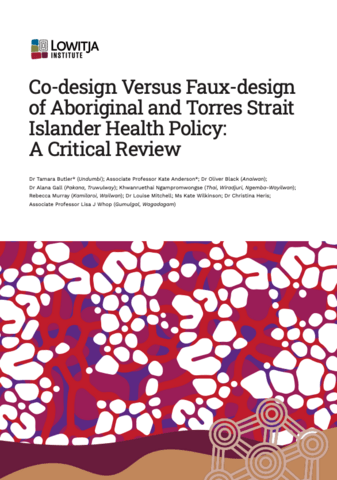
Co-design versus faux-design of Aboriginal and Torres Strait Islander health policy: a critical review
This paper critically reviews current approaches to co-designing and faux-designing (tokenistic or superficial co-design practices) health policy for Aboriginal and Torres Strait Islander peoples. It overviews key concepts, principles and benefits of co-design; highlights concerns with contemporary practices; and outlines critical issues to address. Case studies are included to illustrate aspects of best practice.
Guide
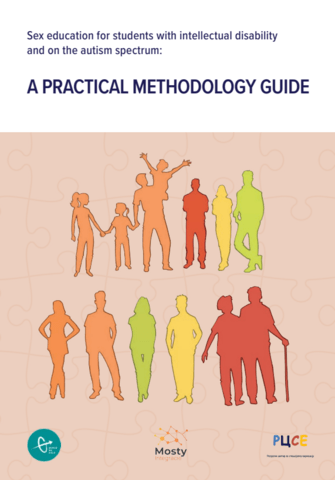
Sex education for students with intellectual disability and on the autism spectrum
A comprehensive resource designed to support effective sex education delivery. The guide incorporates evidence-based practices specifically developed for students with intellectual disability and on the autism spectrum. It features ready-to-use lesson plans covering essential topics from relationships and consent to sexual health and personal safety.

Evaluation
Evaluation of co-design projects
An independent review of the National Disability Insurance Agency's (NDIA) co-design work. The evaluation aimed to better understand the NDIA’s co-design process, identify outcomes from co-design work and consider if the co-design approach was appropriate. It makes recommendations to improve NDIA's co-design processes.
Position paper
Human rights-based needs assessment model
This position statement offers recommendations to guide the Australian Government's transition to a new human rights-based needs assessment model. It urges policymakers and stakeholders to embed human rights, co-design and trusted relationships at the centre of this reform. It makes a series of recommendations for implementation.
Journal article
Nothing about AAC users without AAC users
This article argues for the meaningful inclusion of people who use Augmentative and Alternative Communication (AAC). It advocates for AAC users to be leaders and co-creators in research, technology development and professional training because they have the best insights into their needs and potential solutions.