

Waste minimisation
Alternative labels
Waste minimization
Report
Quick service restaurants food waste sector action plan
The quick service restaurant sector includes fast-food and takeaway outlets that serve quickly prepared meals with minimal table service. Australia loses $36.6 billion to wasted food each year, eroding value across the supply chain through inefficiencies that can be reduced. This action plan was developed to help businesses mitigate back-of-house food waste.
Report
Broadscale microplastic assessment of NSW estuaries
The assessment identifies the coastal waterways most contaminated by microplastics and provides a clear picture of the scale and type of microplastics in New South Wales (NSW) waterways. The study provides a baseline for NSW coastal waterways, enabling targeted management and policy action, as well as raising awareness within the community of microplastic contamination.
Report
No time to waste: waste reduction and recycling policies
This report outlines evidence that Australia's federal policy framework on waste reduction and recycling has failed to achieve its objectives. It recommends the introduction of a circular economy framework, a review of the role that could be played by financial incentives, and implementation of mandatory national rules and regulations to improve environmental and economic outcomes.
Discussion paper
NSW plastics: the way forward
This consultation draft seeks public input on the proposed next stage of New South Wales' Plastics program and recommends ways to reduce single-use, unnecessary and problematic plastic items and materials.
Discussion paper
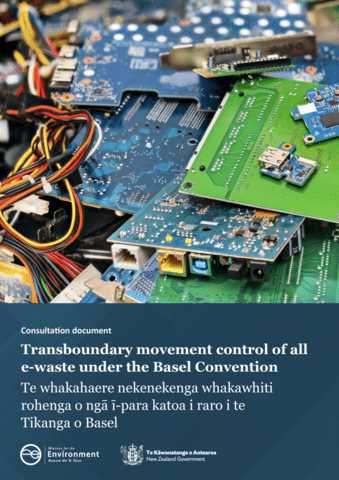
Transboundary movement control of all e-waste under the Basel Convention
This consultation document seeks feedback on proposed regulations affecting the international trade in e-waste. The New Zealand Government proposes extending the current conditions of consent that apply to the import or export of hazardous e-waste to include non-hazardous e-waste, in line with amendments to the Basel Convention.