

Waste diversion
Report
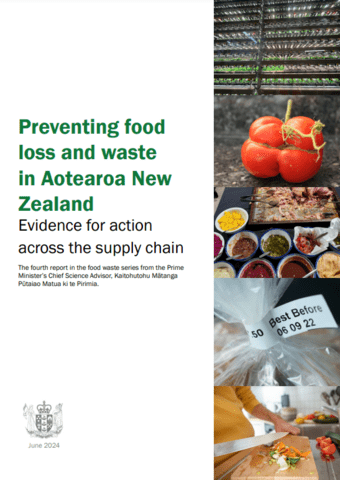
Preventing food loss and waste in Aotearoa New Zealand
Globally, 40% of food produced is lost or wasted. Prevention is the most important intervention to reduce food waste as it has the greatest potential to mitigate the social, economic, and environmental harms. This report identifies sector-specific challenges in preventing food waste and explores the evidence for solutions in the supply chain.
Discussion paper
Textiles waste in Australia: reducing consumption and investing in circularity
Every year, over 300,000 tonnes of clothing is either sent to landfill or exported from Australia. The authors of this paper argue that banning the export of textiles waste, meaningful regulation, taxation and investing in Australia’s capacity to manufacture and recycle domestically, are better solutions for creating a circular economy for this industry.
Report
Circular industry solutions for a global plastics treaty
This report shares key insights and learnings from industry players across the plastics value chain, who have started to develop and implement circular solutions. It gathers case studies from across the globe developed by organisations of various sizes. By analysing existing solutions, this report aims to build confidence and provide relevant insights to industry stakeholders...
Report
Circular Economy Ministerial Advisory Group: interim report
The Circular Economy Ministerial Advisory Group was established in February 2023 and provides advice to the Australian government on the transition to a more circular economy. This interim report summarises the preliminary advice of the Advisory Group from 2023, covering the topics of national policy, economics and investment settings, net zero, the built environment, and...
Report
Australian material flow analysis to progress to a circular economy
This report used data on economy-wide material flows for 2019 to provide insights into Australia’s circular economy potential.