

Evidence-based practice
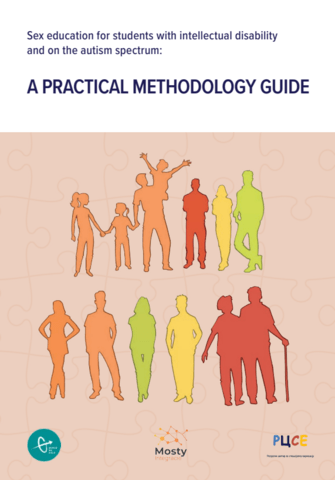
Guide
Sex education for students with intellectual disability and on the autism spectrum
A comprehensive resource designed to support effective sex education delivery. The guide incorporates evidence-based practices specifically developed for students with intellectual disability and on the autism spectrum. It features ready-to-use lesson plans covering essential topics from relationships and consent to sexual health and personal safety.

Guide
EEF scaling framework
An evidence-led framework for scaling the delivery of an educational program or intervention in early years settings, schools and 16 – 19 settings. The framework maps out key considerations and activities involved based on six key dimensions. It is accompanied by a self-assessment tool.
Video
What is good research evidence and how do you find it?
This presentation discusses practical strategies for finding and using research evidence in a practice context related to Australian child and family services. It considers different types of research evidence and how to find and assess its quality, as well as insights into how research evidence can be used alongside other forms of evidence, such as...
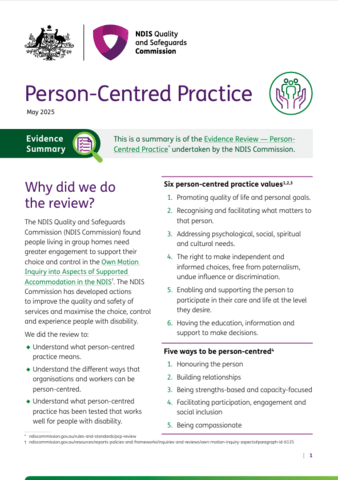
Research Summary
Person-centred practice
This paper summarises an evidence review of person-centred practice. It provides NDIS providers and workers, people with disability, their family and supporters, and health and allied health professionals and practitioners with an overview of person-centred practice in disability. The review covers: what person-centred practice means the different ways that organisations and workers can be person-centred...

Case study
Case studies: Intellectual Disability Health Capability Framework education resources
This educational resource provides written case studies and discussion questions that highlight each of the six areas of the Intellectual Disability Health Capability Framework: intellectual disability awareness; communication; quality evidence-informed health care; coordination and collaboration; decision-making and consent; and responsible, safe and ethical practice.