

Democracy
Alternative labels
Democratic process
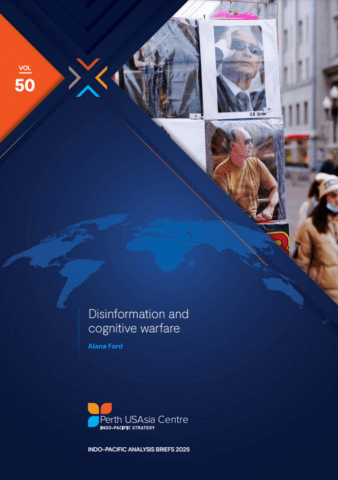
Briefing paper
Disinformation and cognitive warfare
An examination of the threat of disinformation and cognitive warfare in the Indo-Pacific, the brief unpacks how these tactics are reshaping national security and undermining democratic institutions. Drawing on global examples, it highlights the implications for regional stability and democratic resilience.

Report
Strategic foresight toolkit for resilient public policy
Designed for policymakers, public administrators and foresight practitioners, the toolkit aims to support countries and organisations in using strategic foresight to design and prepare robust and adaptable public policies for a range of possible futures. It features a five-step foresight process, facilitation guides and case studies to support effective implementation.
Guide
Addressing challenges faced by Chinese and South Asian–origin communities in political participation and media literacy
This toolkit summarises the five main challenges encountered in meaningful political participation and media literacy by Chinese and South Asian origin research participants resident in Australia for at least 2 years. It also presents evidence-based recommendations to address these challenges for a range of stakeholders.
Report
Partisanship, polarisation and social cohesion in Australia
The findings of the 2024 McKinnon Poll show strong support for the nation’s democratic system despite growing polarisation. The poll reveals a decline in traditional political partisanship alongside public concern about issue-based polarisation, driven by social media and divisive politics. The report underscores the importance of constructive policy dialogue promoting social cohesion.
Discussion paper
Income inequality and democratic resilience: impacts and policy choices
This paper examines the relationship between income inequality and democratic resilience, focusing on how perceptions of economic disparity influence public satisfaction with public institutions. It finds that perceived inequality significantly affects attitudes toward the government, suggesting that addressing the disconnect between public expectations and government action on inequality could enhance democratic satisfaction.