

Artificial Intelligence (AI)
Alternative labels
Generative AI (GenAI)

Report
Expanding AI sovereignty to AI agency
Artificial intelligence (AI) is reshaping global power, prosperity and security but debates about AI sovereignty are often disconnected from the complex trade-offs leaders face. The tool presented in this report offers a practical solution. It is a structured and repeatable method to assess a nation’s AI maturity, sovereignty and agency across 103 AI capabilities.

Report
Governing the future: recommendations from the Edinburgh Data and AI Exchange
This report describes discussion at an event held to work through what both the United Kingdom and Scottish governments’ AI ambitions require in practice. This report sets out what that process produced, including the recommendations that emerged, the consensus that underpinned them and the questions that remain unresolved.
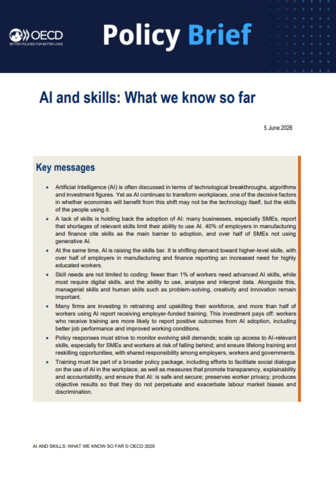
Briefing paper
AI and skills: what we know so far
This policy brief summarises and brings together various pieces of OECD research to build a coherent narrative on what is known about artificial intelligence (AI) and skills. The policy brief highlights the importance of skills to make a success of AI and identifies several areas for policy action and future research.
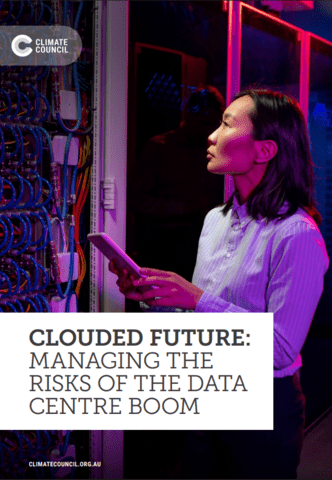
Report
Clouded future: managing the risks of the data centre boom
A surge in Australian data centre construction driven by artificial intelligence (AI) risks pushing up power bills and climate pollution, according to this report. With more than 90 projects in the pipeline, this report proposes that every new data centre in Australia must be subject to strong standards for both its energy and water use.
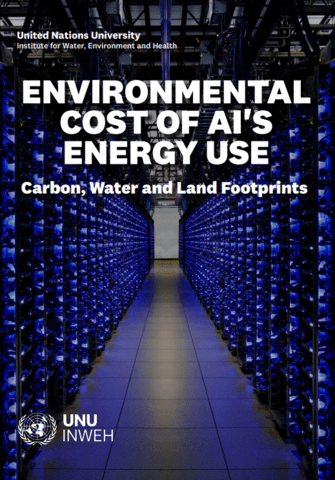
Report
Environmental cost of artificial intelligence: carbon, water and land footprints
This report examines the environmental footprints of the energy required to power artificial intelligence's (AI’s) rapid expansion. It frames AI’s environmental footprint as a governance and justice challenge, not only a technical problem. The benefits of AI often flow across borders and sectors, while the environmental burdens can be concentrated in specific communities and regions.