

Technology and youth
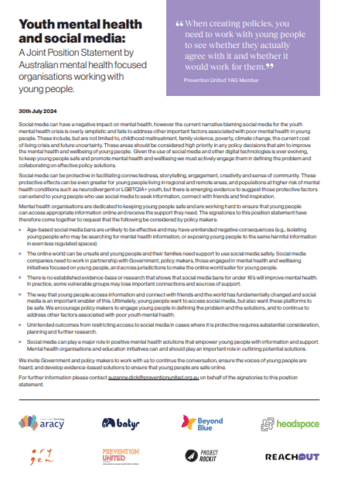
Position paper
Youth mental health and social media
This statement argues age-based social media bans are unlikely to be effective and that it is important that policymakers, social media platforms and mental health organisations work together to develop evidence-based solutions to ensure that young people are safe online.
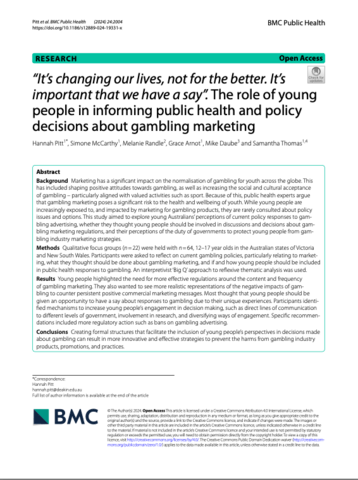
Journal article
“It’s changing our lives, not for the better. It’s important that we have a say”: the role of young people in informing public health and policy decisions about gambling marketing
While young people are increasingly exposed to, and impacted by marketing for gambling products, they are rarely consulted about policy issues and options. This paper explores young Australians’ perceptions of current policy responses to gambling advertising, whether they thought young people should be involved in discussions and decisions about gambling marketing regulations, and their perceptions...
Report
Building digital resilience: girls and young women demand a safer digital future
This report makes the case that safety in online spaces is a human right as well as a gender equality issue and that ensuring the online safety of children and young people, in all their diversity, is a shared responsibility between governments, policy makers, civil society institutions, parents, guardians, and the wider community at local...
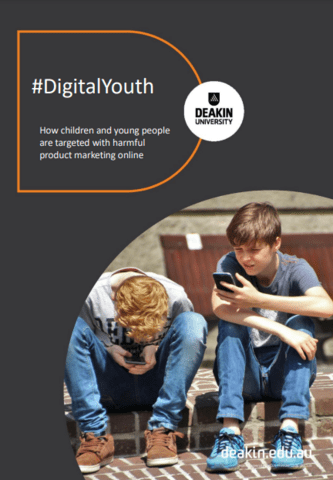
Briefing paper
#DigitalYouth: How children and young people are targeted with harmful product marketing online
This pilot study which analyses screen recordings from young people’s online activity found that companies are targeting them with ads for harmful products including alcohol, gambling and junk food. The ads drive engagement with harmful and addictive products.
Report
Consultation summary: digital technologies and youth mental health
The National Mental Health Commission has undertaken work to better understand the interplay between digital technologies and mental health. In 2023, the Commission held a 3-part consultation consisting of a public consultation via an online survey, input from an Expert Advisory Group, and input from a Youth Advisory Group. This document is a summary of...