

Blockchain
Alternative labels
Blockchain technology
Blockchains
Description
Blockchain is an open-sourced, decentralised, public and digital computer protocol stored on many different computers at once which allows for users to transact, peer-to-peer. The blocks are a growing list of records linked together using cryptography, forming a publicly distributed ledger.

Report
Developments in Web3 for the creative industries
Web3 is an online ecosystem based on blockchain technologies, involving peer-to-peer transactions and coordination tools. This report examines the what, why, who and where of Web3 for the cultural and creative industries, using examples from visual art, music and games.

Report
Regenerative Finance "ReFi": blockchain for climate action
Interview participants in this research project see ReFi as a potentially revolutionary movement, capable of transforming prevailing value systems. The interviewees pointed to several ways blockchain technology could support climate action.
Briefing paper
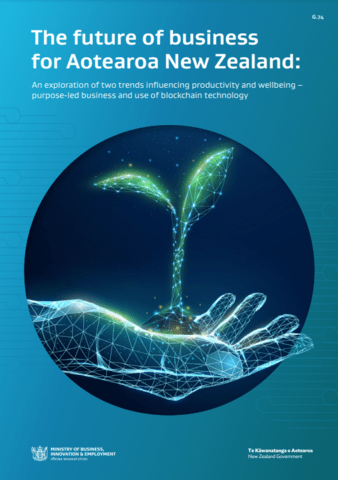
The future of business for Aotearoa New Zealand
This briefing explores how the future of business in New Zealand may be shaped by two trends over the next 10 years and beyond - growth in purpose-led businesses and use of blockchain technology.
Strategy
The OECD Going digital measurement roadmap
Measuring digital transformation is a key component of designing and implementing evidence-based policies today. This strategy document includes ten actions that, if prioritised and implemented, would substantially advance the capacity of countries to monitor digital transformation and its impacts.
Policy report
Policy brief on access to finance for inclusive and social entrepreneurship: what role can fintech and financial literacy play?
This policy brief presents evidence on the access to finance challenges faced by entrepreneurs from under-represented and disadvantaged groups and social entrepreneurs, and discusses how public policy and better regulation could harness the potential of fintech to address these challenges.