

Climate financing
Report
The state of net zero investment 2025
This report provides an overview of investors’ climate progress in Australia, based on data from 65 of the largest superannuation funds, retail funds, and fund managers. It reports on positive progress with investor interest increasing across a range of climate solutions. Barriers remain to investing in climate solutions which offset some of the positive trends.
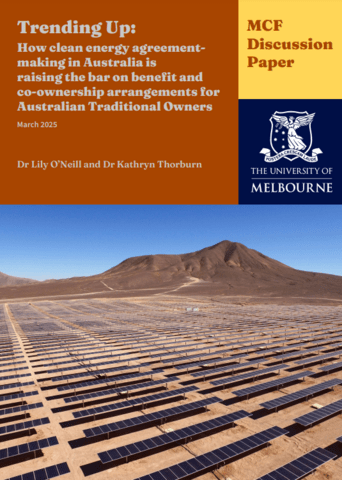
Discussion paper
Trending up: how clean energy agreement-making in Australia is raising the bar on benefit and co-ownership arrangements for Australian Traditional Owners
The clean energy transition has the potential to be very beneficial for Australian Traditional Owners on whose Country much of it will occur. However, the transition also brings significant risks. This discussion paper on native title agreements relating to renewable energy identifies five factors that are critical to success for Traditional Owners.
Report
Too hot to think straight, too cold to panic: landing the economic case for climate action with decision makers
There is a strong case for investing in climate mitigation and adaptation based on the severe economic consequences alone. To limit global warming to 2°C by 2100, and avoid a reduction in cumulative GDP of up to 27%, investment in mitigation must increase ninefold and adaptation thirteenfold by 2050. The report identifies priority levers to...
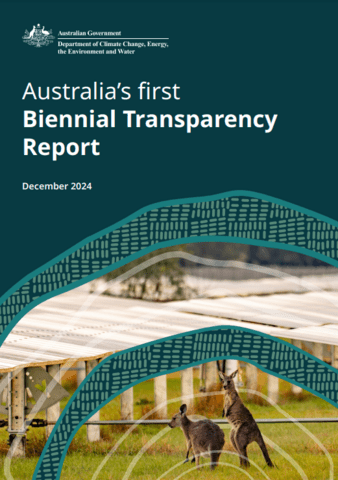
Report
Australia’s first biennial transparency report
This report is a new requirement of the Paris Agreement. It provides information on Australia’s greenhouse gas emissions and trends, national circumstances and current policies and measures. It also reports on Australia’s climate change impacts, adaptation actions and financial contribution to developing countries that are party to the Paris Agreement.
Discussion paper
Accelerating business investment in climate change mitigation and adaptation
This paper argues that climate change poses significant economic risks to businesses, as well as substantial investment opportunities. It looks at the economic risks and barriers to investment and the potential benefits for business of acting early. The author calls for policy measures that reduce barriers and incentivise private investment in climate solutions.