

Gambling
Alternative labels
Betting
Gambling policy
Gambling accessibility
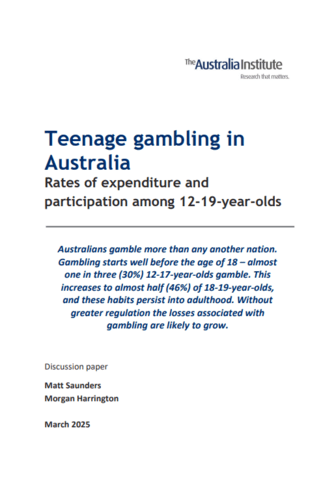
Discussion paper
Teenage gambling in Australia
Australians start gambling in large numbers well before they are old enough to legally gamble. This paper reveals that Australian teenagers are more likely to gamble than to play any of the most popular sports in their age group. The paper shows the need for stronger regulations to reduce the harm caused by gambling.
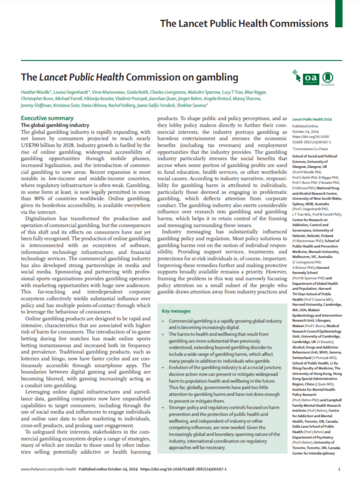
Journal article
The Lancet Public Health Commission on gambling
This Commission conducted a systematic review and meta-analysis of the global prevalence of gambling participation, including any risk gambling, gambling disorder, and problematic gambling in adults and adolescents. It found the harms to health and wellbeing that result from gambling are more substantial than previously understood.

Working paper
Gambling participation in Australia 2024: trends over time, and profiles associated with online gambling
Problem gambling is a major public health concern in Australia and internationally. This paper presents the first nationally representative data of the rates of online gambling participation beyond COVID-19. While overall gambling participation rates have decreased over the past 15 years, online gambling rates have exponentially increased in the same period.

Briefing paper
#DigitalYouth: How children and young people are targeted with harmful product marketing online
This pilot study which analyses screen recordings from young people’s online activity found that companies are targeting them with ads for harmful products including alcohol, gambling and junk food. The ads drive engagement with harmful and addictive products.
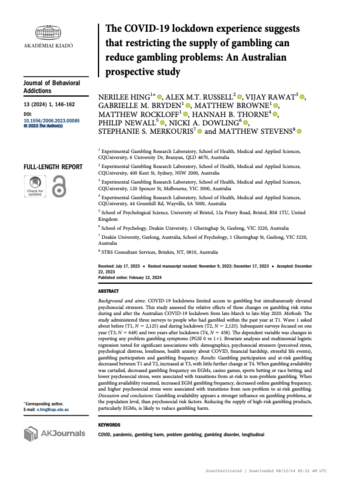
Journal article
The COVID-19 lockdown experience suggests that restricting the supply of gambling can reduce gambling problems: an Australian prospective study
This article reports on a study that assessed people's gambling during and after the Australian COVID-19 lockdown. It found that gambling availability appears a stronger influence on gambling problems than psychosocial risk factors. Reducing the supply of high-risk gambling products is likely to reduce gambling harm.