

Electricity demand
Alternative labels
National Electricity Market
Report
Beyond patchwork reform: a new institutional architecture for the National Electricity Market
According to this report, the National Electricity Market (NEM) – the system which connects more than 80% of Australians to one electricity grid – needs a fundamental overhaul. The original design of the NEM assumed that private markets and price signals could not only guide investment, but also accommodate changing environmental requirements. The analysis makes...
Report
The state of grid transition 2026: scenarios for future living
This report aims to stimulate and initiate a new wave of industry engagement by evaluating the current state of electricity grid transition. It identifies challenges and proposes a participatory foresighting program governed by eight core design principles to unlock a future resilient grid.
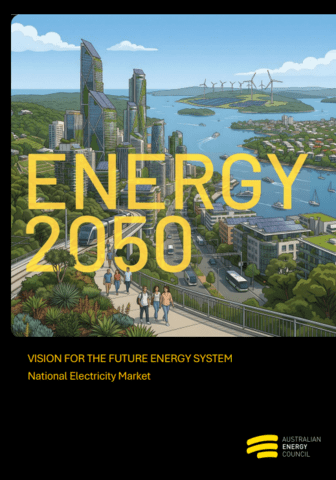
Report
Energy 2050: vision for the future energy system
Energy2050 is intended to be a vision statement, illustrating what it will take to deliver a net zero energy system in Australia while balancing affordability, reliability and sustainability. It seeks to illustrate key enablers in both the National Electricity Market and the South West Interconnected System that will allow the sector to successfully deliver the...
Report
Investing in cheaper, cleaner energy and the net zero transformation: inquiry report
Reducing emissions from greenhouse gases is an important national priority. Minimising the cost of meeting Australia’s emissions targets will free resources for other uses. And speeding up approvals for new energy infrastructure will support decarbonisation across the economy. This final inquiry report presents recommendations focused on three key policy reform areas.

Report
Bills down, emissions down: a practical path to net-zero electricity
This report finds that Australian household energy bills are set to halve by 2050, leaving ‘policy room’ for the federal government to cut emissions in the electricity sector without hurting households. It recommends a three-pronged strategy to accelerate the push to net zero.