

Child welfare
Guide
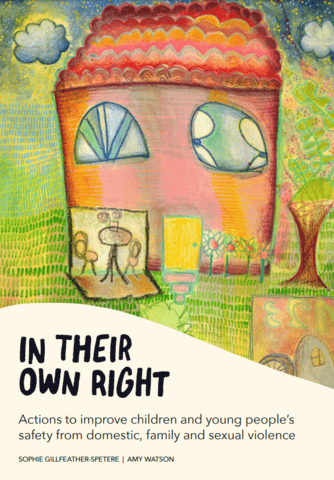
In their own right: actions to improve children and young people’s safety from domestic, family and sexual violence
Designed for use by policymakers, practitioners and advocates, this guide synthesises research to outline key actions for consistent and effective policy responses supporting children and young people experiencing violence. It includes four principles that outline ways of working to underpin reform and eight priority areas for action.
Journal article
Understanding the wellbeing needs of First Nations children in out-of-home care in Australia
This is a comprehensive review on the wellbeing needs of First Nations Australian children in out-of-home care (OOHC) and the aspects of care that support them. It supports ongoing efforts to improve OOHC for First Nations children and helps clarify elements that promote their wellbeing based on their experiences in care and the perspectives of...
Report
Leaving care cohort (15-17 years) statistical report: experiences of young people who entered out-of-home care aged 4-14 years
This report focuses on a cohort of young people in out-of-home care (OOHC) who were aged 15-17 years at the time of their interview and describes the experiences of young people who entered OOHC when they were 4-14 years old. It focuses on the demographic characteristics, socio-emotional wellbeing, social competence, verbal ability, non-verbal reasoning and...
Report
Outcomes for children and young people in non-government organisations managed out-of-home care
This paper presents findings from the first large-scale prospective longitudinal study of children and young people in out-of-home care (OOHC) in Australia, comparing the socio-emotional outcomes of government- and non-government-managed care. It notes a range of factors that influence wellbeing but finds no evidence that the case management provider has a significant impact.
Report
Children and young people in residential care: statistical report
This report focuses on a cohort of children and young people in OOHC who were in residential care at the time of the study. It focuses on the demographic characteristics, socio-emotional wellbeing, social competence, verbal ability, non-verbal reasoning and the perspectives of the children and young people in residential care.