

First Peoples
Alternative labels
First Nations people
Indigenous
Indigenous peoples
Journal article
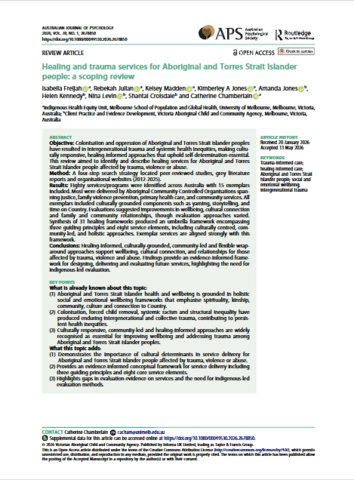
Healing and trauma services for Aboriginal and Torres Strait Islander people
This review article identifies and describes healing services for Aboriginal and Torres Strait Islander people affected by trauma, violence or abuse. Findings provide an evidence-informed framework for designing, delivering and evaluating future services, highlighting the need for Indigenous-led evaluation.
Policy report
Racism in schools policy paper
Racism in Australian school settings continues to be a prevalent issue for Aboriginal and Torres Strait Islander students and students from Culturally and Linguistically Diverse backgrounds. From a literature review conducted into the prevalence and impacts of racism, the case is outlined for a National Anti-Racism Framework to be embedded in Australian schools.

Report
Support and regulation of Indigenous corporations
The objective of the audit was to assess whether Indigenous corporations are being effectively supported and regulated under the Corporations (Aboriginal and Torres Strait Islander) Act 2006. It found the Office of the Registrar of Indigenous Corporations (ORIC) has largely fit-for-purpose governance arrangements. ORIC's support and regulation of Indigenous corporations under the Act is partly...
Report
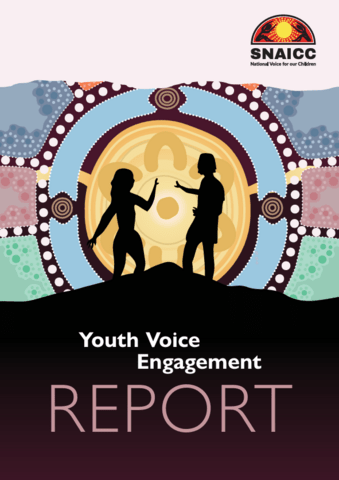
Youth Voice engagement report
This report documents a national co-design process to establish a strong, culturally grounded and community-led Youth Voice initiative for Aboriginal and Torres Strait Islander young people. Participants said existing systems too often engage young people in tokenistic or advisory-only ways, without genuine power-sharing or accountability.
Working paper
Research review on the effectiveness of youth and rangatahi mental health early intervention and secondary prevention approaches
This review examines the effectiveness of early intervention and secondary prevention approaches for supporting the mental health and wellbeing of young people and rangatahi aged 12-24 years. Overall, the evidence suggests many supports, including brief and low-intensity approaches, can reduce distress and improve wellbeing, functioning and coping.