

Briefing paper

Briefing paper
A better Medicare: how to reform GP funding
The bulk-billing incentive – a bonus the federal government pays general practitioners (GPs) when they don’t charge patients a fee – has been supercharged twice in recent years. But 'GP deserts’ – the communities with the fewest GP services per person – are being left further behind. This policy brief proposes two policy reforms are...
Briefing paper
Mainstreamed but sidelined: global funding for gender equality
Gender equality is central to sustainable development and is a crucial enabler of global security, stability and prosperity, but progress is stagnating or regressing across much of the developing world. This report assesses the current situation and suggests changes to reverse the regression of gender equality in the developing world.
Briefing paper
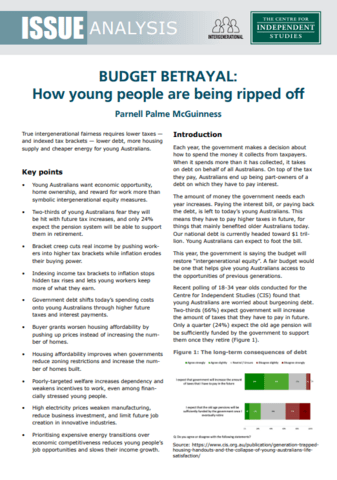
Budget betrayal: how young people are getting ripped off
This year, the Australian Government is saying the budget will restore 'intergenerational equity'. This analysis argues that policies presented as promoting ‘intergenerational equity’ are failing to address the structural drivers of inequality. It presents recent polling indicating that young Australians are worried about burgeoning public debt. The paper proposes alternative policies to deliver intergenerational fairness.
Briefing paper
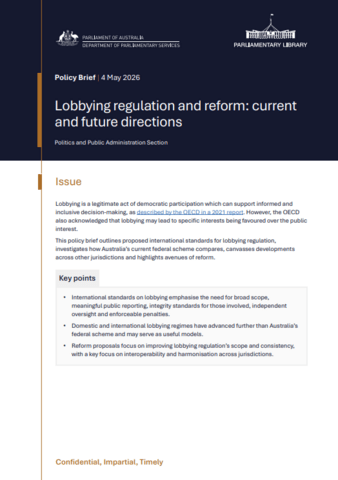
Lobbying regulation and reform: current and future directions
Lobbying is a legitimate act of democratic participation which can support informed and inclusive decision making. However, lobbying may lead to specific interests being favoured over the public interest. This brief outlines proposed international standards for lobbying regulation, investigates how Australia’s current federal scheme compares, canvasses developments across other jurisdictions and highlights avenues of reform.
Briefing paper
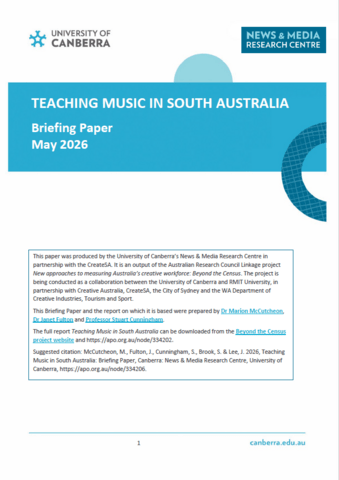
Teaching music in South Australia
This briefing paper presents findings from a study of South Australian musicians working in education. It provides new evidence on incomes, career pathways, portfolio work, schooling, and industry links, and introduces the concept of ‘twin sustainabilities’, showing music teaching supports viable careers while also sustaining the future of the music industry.