

Sensitivity Warning
First Peoples
Aboriginal and Torres Strait Islander peoples should be aware that this resource may contain images or names of people who have since passed away.
Briefing paper
 SHARE
SHARE
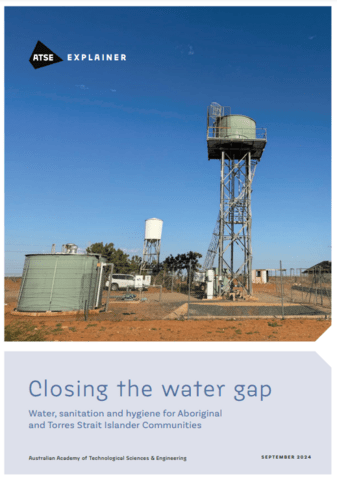
Closing the water gap
Water, sanitation and hygiene for Aboriginal and Torres Strait Islander communities
Publisher
Health inequity
Water pollution
Water quality
Sanitation
First Peoples health
Rural and remote communities
Australia

Description
Many Aboriginal and Torres Strait Islander communities have inadequate drinking water, sanitation, and hygiene (WASH) accessibility. This report outlines certain approaches that can be made to protect against water inequalities in remote Aboriginal and Torres Strait Islander communities.
Key findings
- Mineral, chemical and microbial contamination exceeding safe thresholds set by the Australian Drinking Water Guidelines for prolonged periods are causing chronic health impacts in Aboriginal and Torres Strait Islander communities.
- Remote communities lack baseline data on water quality, and many are not able to access regular testing to know if they meet the drinking water guidelines.
- Issues with poor WASH in Aboriginal and Torres Strait Islander communities have lasted for decades, and have been compounded by short-term research funding cycles and political leadership roles.
- Contributors to water pollution, such as mining and agriculture industries, need to be held accountable to reduce water pollution issues.
- Greater communication is needed between council staff, water treatment plant operators, and local community champions to adequately address poor water quality issues in remote Aboriginal and Torres Strait Islander communities.
- More fit-for-context water treatment technologies are needed, such as modular water treatment systems that are designed for poor water quality found in remote communities.
Publication Details
Copyright:
Australian Academy of Technological Sciences and Engineering 2024
Access Rights Type:
open
Post date:
13 Sep 2024
