

Briefing paper
 SHARE
SHARE
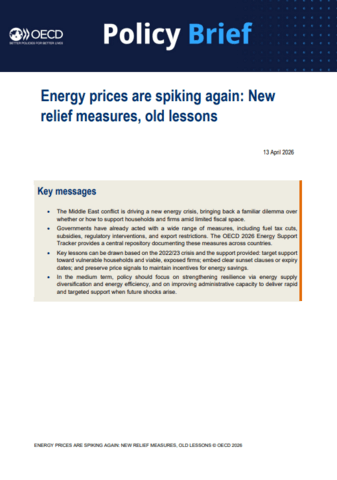
Energy prices are spiking again: new relief measures, old lessons
Publisher
Energy pricing
Industry assistance
Household finance
Policymaking
Policy analysis
Energy security
Crisis response
OECD countries

Description
This policy brief summarises the support measures governments have implemented so far in response to the sharp rise in energy prices linked to the Middle East conflict. Many OECD countries have moved quickly to provide support, most often through fuel-tax cuts and other price-support measures, while targeted income support and regulatory interventions have been used less widely so far.
The brief also distils lessons from the 2022–23 energy crisis for the design of current support measures:
- targeting the most vulnerable households and otherwise viable, heavily exposed firms can limit fiscal costs and maximise the impact of support
- embedding clear sunset clauses or automatic phase-out rules in support measures can prevent support from becoming entrenched and excessively costly
- designing support in ways that maintain price signals can preserve incentives to save energy.
Key findings
- The Middle East conflict is driving a new energy crisis, bringing back a familiar dilemma over whether or how to support households and firms amid limited fiscal space.
- Governments have already acted with a wide range of measures, including fuel tax cuts, subsidies, regulatory interventions, and export restrictions.
- In the medium term, policy should focus on strengthening resilience via energy supply diversification and energy efficiency, and on improving administrative capacity to deliver rapid and targeted support when future shocks arise.
Publication Details
DOI:
10.1787/a68e5c37-en
Copyright:
OECD 2026
License type:
CC BY
Access Rights Type:
open
Post date:
20 Apr 2026
