

Organisation
Organisation for Economic Co-operation and Development (OECD)
Website:
Report
The economic benefit of promoting healthy ageing and community care
Without a stronger focus on healthy ageing, population ageing will have a strong impact on health and long-term care expenditures. This report discusses how a stronger focus on preventive interventions and reablement helps promote healthy ageing. It highlights that promoting healthcare closer to people and more integrated care are cost-effective interventions for older people.
Report
OECD guidelines on measuring subjective well‑being (2025 update)
Subjective wellbeing encompasses the ways that people experience and think about their lives. Building on the first edition, these guidelines seek to improve the quality and international comparability of subjective wellbeing data. They provide data producers with the information and tools they need to measure subjective wellbeing in a robust, well-validated and internationally comparable way.

Report
How can research and initial teacher education institutions support research use?
How can research and initial teacher education institutions become active drivers of evidence-informed policy and practice? Drawing on data from the OECD’s 2023 Survey of Knowledge Mobilisation and international research, this paper offers considerations and examples on how to strengthen the role of research and initial teacher education institutions in knowledge mobilisation.
Report
Governing with artificial intelligence: the state of play and way forward in core government functions
An examination of how governments use and engage with artificial intelligence (AI). This report analysed 200 use cases and dozens of policy initiatives around the world, including Australia, to understand how AI is applied and promoted across 11 core areas of government.
Briefing paper
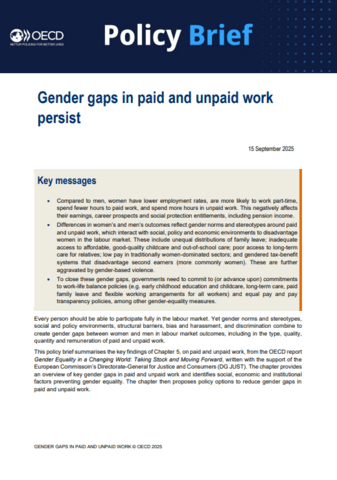
Policy brief: gender gaps in paid and unpaid work persist
This policy brief summarises key findings on gender gaps in paid and unpaid work, from the OECD report Gender equality in a changing world, identifying relevant social, economic and institutional factors preventing gender equality. It closes with relevant policy options to reduce gender gaps in paid and unpaid work.