

Organisation
Organisation for Economic Co-operation and Development (OECD)
Website:
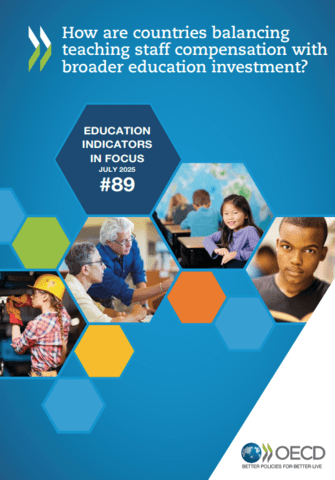
Briefing paper
How are countries balancing teaching staff compensation with broader education investment?
Teachers’ salaries consistently represent the largest spending item in public primary and secondary educational institutions across OECD countries and are often the subject of debate. This policy brief outlines spending patterns across OECD countries, highlighting the complexity of implementing broad salary reforms. It finds that even modest salary increases for teachers can have a significant...
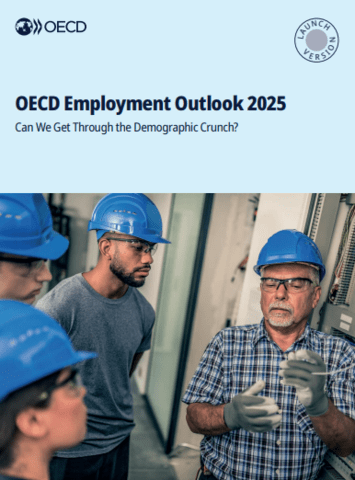
Report
OECD employment outlook 2025: can we get through the demographic crunch?
This outlook looks at the latest labour market developments and prospects in OECD member countries. It also discusses the challenges population ageing poses more generally. The consequences of an ageing workforce for productivity growth are analysed. Without swift changes in policies and behaviours, GDP per capita growth will slow down significantly in most OECD countries.

Report
Supports (th)at work: policy tools to support workplace action on intimate partner violence
Effective workplace supports can help to address the high social and economic costs of intimate partner violence (IPV) to individuals, businesses and societies. This policy paper highlights steps that employers and governments are taking to strengthen workplace approaches to IPV, especially public policy measures across OECD countries to encourage an effective workplace response.
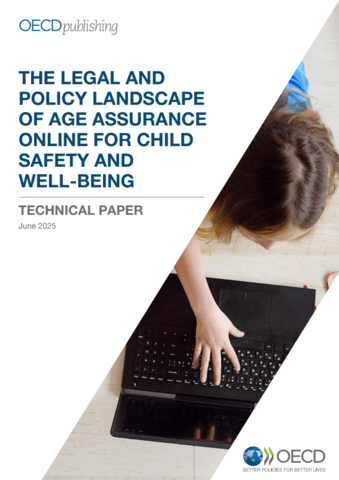
Report
The legal and policy landscape of age assurance online for child safety and well-being
This report maps the current legal and policy landscape for age assurance. It analyses laws that establish age-dependent protections or obligations and therefore trigger a need to assure age. This work aims to support government and industry action for promoting the opportunities offered by digital technologies for children while keeping them safe from potential harms.

Report
Strengthening regional policy for resilient places
This paper explores how regional development policies can enhance resilience and competitiveness in the face of global shocks, transitions and persistent inequalities. It argues for a shift toward place-based strategies that address spatial disparities and leverage local assets to drive sustainable productivity growth.