

Organisation
Organisation for Economic Co-operation and Development (OECD)
Website:
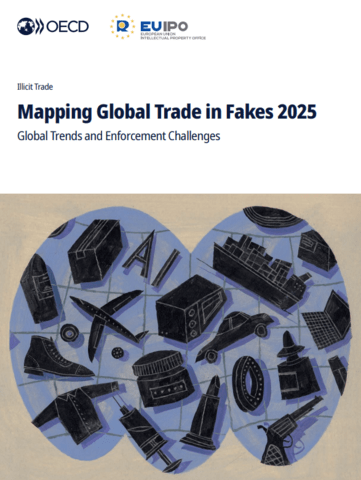
Report
Mapping global trade in fakes 2025
This report provides an analysis of global trade in counterfeit and pirated goods. Counterfeit goods that infiltrate supply chain networks undermine legitimate businesses, deprive governments of revenue, and pose public health and safety risks. The report examines emerging trends and highlights the need for coordinated international efforts to secure supply chains.
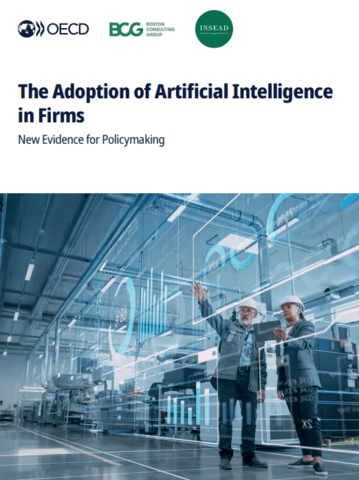
Report
The adoption of artificial intelligence in firms: new evidence for policymaking
Artificial intelligence (AI) could help to address sluggish productivity growth in OECD countries. This report provides evidence for policymakers, business leaders and researchers to help understand the adoption of AI in enterprises and the policies needed to enable this. Achieving higher rates of AI adoption could raise labour productivity and have other desirable outcomes.
Report
Taxing wages 2025
This report provides details of taxes paid on wages in OECD countries with cross-country comparison. It focuses on the decomposition of personal income taxes and the role of tax reliefs. It finds that post-tax incomes increased in almost three-quarters of OECD countries in 2024, as real wages recovered and labour taxes increased slightly.
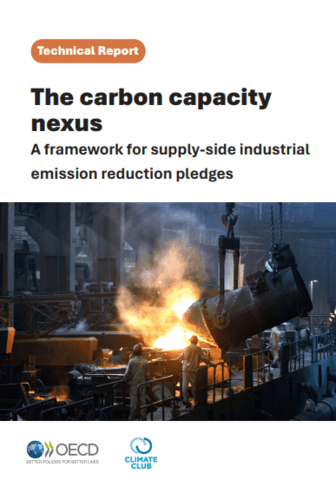
Report
The carbon capacity nexus: a framework for supply-side industrial emission reduction pledges
This report presents a framework to support the development of supply-side climate pledges in emissions-intensive sectors, using the steel industry as an example. Focusing on the 'carbon-capacity nexus' – the relationship between industrial capacity and carbon emissions – it identifies key actions that governments and companies can take to reduce emissions through adjustments in industrial...
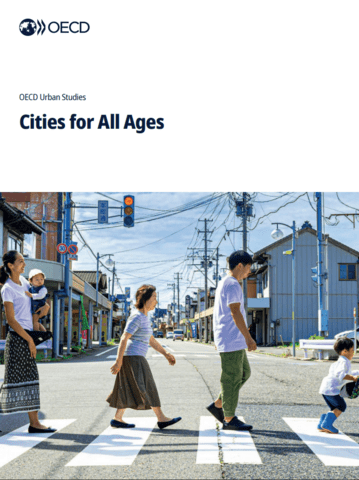
Report
Cities for all ages
This report provides a structured approach for governments at all levels to develop and strengthen policies to build age-inclusive cities. It makes recommendations around inclusive urban planning, age-targeted housing solutions, tailored services and job opportunities, producing age-specific data, and sharing good practices through multi-city collaborations.