

 SHARE
SHARE

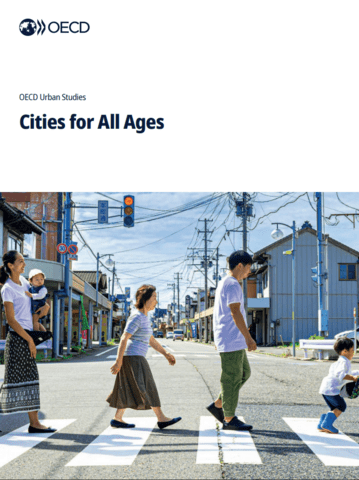
Cities that fail to be age‑inclusive and do not address the needs of people of all ages in urban planning and policies are likely to face significant social and economic costs. These include higher risks of poor health, loneliness, isolation and poverty, and associated higher public expenditures for older residents, reduced educational and social opportunities for children and reduced attractiveness for the young, with consequences for the labour market and productivity growth.
By embodying an age-inclusive approach in urban policy making, governments can promote access to opportunities for residents at every stage of life, but also advance on broader goals such as competitiveness, environmental sustainability and social cohesion, delivering many win-win outcomes. Efforts to create cities for all ages are already underway in many cities, focusing on three key policy areas: urban design and land use planning; targeted housing provision; and strengthening the local economy by integrating young and older adults as workers and consumers.
Based on an analysis of local and national government initiatives across these three policy areas, the report provides a structured approach for governments at all levels to develop and strengthen policies to build cities for all ages around three action areas:
- Strategy setting
- Resource development
- Stakeholder co-ordination
