

Report
Employment support for people with intellectual disability: what works and how to implement it in Australia
Australians with intellectual disability face one of the lowest rates of open employment. This report distils the evidence on what works, what doesn’t, and how stakeholders can take practical steps to close the employment gap, including helping employers design jobs and supports that suit the person.
Research Summary
Employment support for people with intellectual disability: what works and how to implement it in Australia
Australians with intellectual disability face one of the lowest rates of open employment. This summary distils the evidence on what works, what doesn’t, and how stakeholders can take practical steps to close the employment gap, including helping employers design jobs and supports that suit the person.
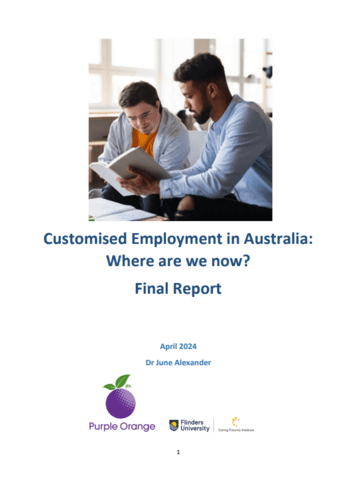
Report
Customised employment in Australia: where are we now?
This report investigates the implementation of Customised Employment (CE) in Australia, focusing on its effectiveness and the barriers faced by National Disability Insurance Scheme (NDIS) participants in accessing CE services. Findings reveal that CE offers strong employment outcomes for people with intellectual and complex disabilities, especially when its four stages are properly applied. However, challenges...
Journal article
Shifting power to people with disability in codesigned research
This paper explores tensions navigated by researchers and project leaders when involving people with disability as experts in co-design and in the core team. Part of an evaluation aiming to improve paid employment of people with intellectual disability is used to consider this work.
Journal article
On-the-job training supports for people with intellectual disability employed in aged care
This study describes components of training provided to people with intellectual disability undergoing traineeships for 12 months in four aged care services. It finds that successful traineeships for people with intellectual disability require support from both the trainee and mentors.