

Guide
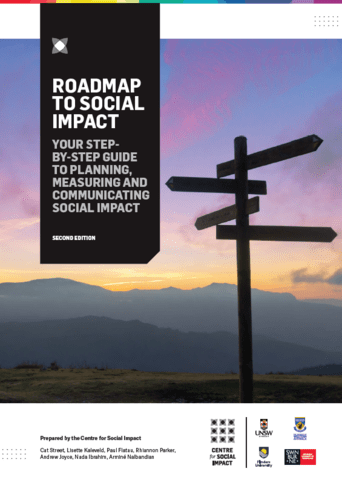
Roadmap to social impact: your step-by-step guide to planning, measuring and communicating social impact
This guide supports organisations in planning, measuring and communicating program outcomes. It outlines key components of outcomes measurement and evaluation, explaining core concepts, their importance and practical application. It is intended for individuals and organisations seeking to create positive social impact and understand their contribution at individual, organisational, community and societal levels more clearly overall.
Journal article
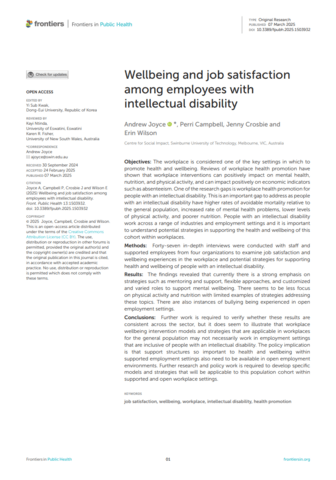
Wellbeing and job satisfaction among employees with intellectual disability
Research exploring the job satisfaction and wellbeing experiences of people with intellectual disability in the workplace and potential strategies for supporting their health and wellbeing through workplace interventions. Findings suggest workplace wellbeing intervention models and strategies for the general population may need to be modified to be inclusive of people with intellectual disability in both...
Journal article
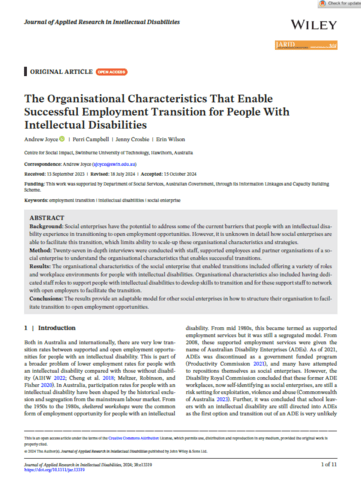
The organisational characteristics that enable successful employment transition for people with intellectual disabilities
This qualitative study investigated how social enterprises are able to facilitate people with intellectual disability transitioning to open employment. It found that key organisational characteristics included a variety of roles and workplace environments and dedicated staff support roles.
Journal article
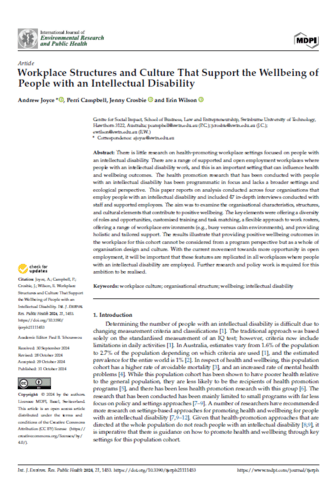
Workplace structures and culture that support the wellbeing of people with an intellectual disability
This research explored the organisational characteristics contributing to positive wellbeing for workers with intellectual disability. It found the key elements were: diversity of roles, customised training and task matching, flexible rosters, a range of workplace environments and providing tailored support.
Journal article
Brokering employment pathways from supported employment settings to the mainstream labour market
In Australia, many people with a disability work in Supported Employment Settings (SESs). This paper examines how one case study SES facilitates pathways to open employment for supported employees. The paper explores three key questions: what do these pathways look like, what role can SESs play in facilitating these transitions and what are the challenges...