

Preventative health
Report
Counting what matters: how to classify, account and track spending for prevention
This paper analyses the current constitutional and operational framework for a new classification of public expenditure. The aim is to identify expenditure and encourage the ‘shift to prevention’. It considers three expenditure areas in the United Kingdom: health, homelessness and children’s social care. By differentiating between everyday spending and preventative spending, the government could measure...
Strategy
National action plan for the health and wellbeing of LGBTIQA+ people 2025-2035
A plan to improve the health and wellbeing of the LGBTIQA+ community, to improve the care and support LGBTIQA+ people receive and deliver better physical and mental health outcomes across the community. Addressing the significant health disparities experienced by LGBTIQA+ people, the plan will guide government action to make safe, inclusive and high-quality health care...
Fact sheet
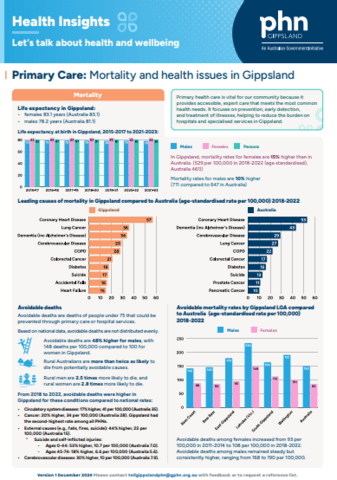
Primary care: mortality and health issues in Gippsland
This fact sheet presents the main health issues relating to mortality in primary care facing people in Gippsland, Victoria. It presents the leading causes of mortality and avoidable mortality rates in Gippsland compared to Australia. The data is presented alongside burden of disease measures in Australia in 2024 and areas for improvement.
Fact sheet
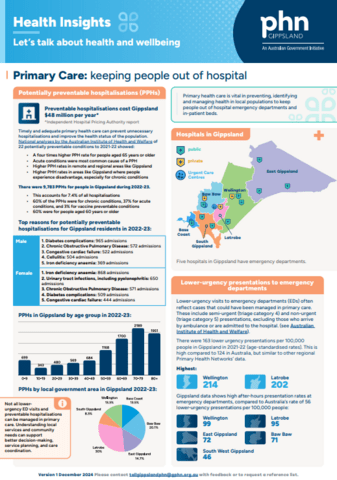
Primary care: keeping people out of hospital
This fact sheet highlights primary health care as vital in preventing, identifying and managing health in local populations to keep people out of hospital emergency departments and in-patient beds. It presents information on potentially preventable hospitalisations and lower-urgency presentations to emergency departments, and includes both community and professional perspectives.
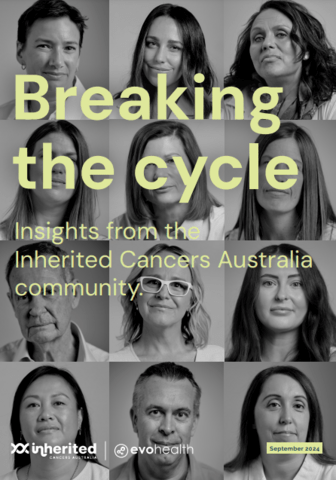
Report
Breaking the cycle: insights from the Inherited Cancers Australia community
This report distils the insights from a survey of the Inherited Cancers Australia community and proposes three recommendations to government so that organisations can continue to provide valuable information, advice and support for people at risk of hereditary cancer.