

Economic modelling
Report
Workforce pressures facing the food and grocery manufacturing sector
This report examines workforce pressures facing Australia’s food and grocery manufacturing sector, setting a focus for long-term solutions. The report provides a macro assessment of workforce challenges affecting the sector. Key occupations in focus for this report include food and drink factory workers; packers; forklift drivers; purchasing and supply logistics clerks; and manufacturing production managers.
Report
Safeguard Mechanism emissions sensitivities and baseline impacts
Australia's Safeguard Mechanism – designed to cut industrial climate pollution – is up for review in 2026–27. This new modelling shows the scheme is on track to fall well short of Australia’s 2035 climate target unless urgent reforms are made. The report finds that the scheme is being gamed by coal and gas corporations.
Briefing paper
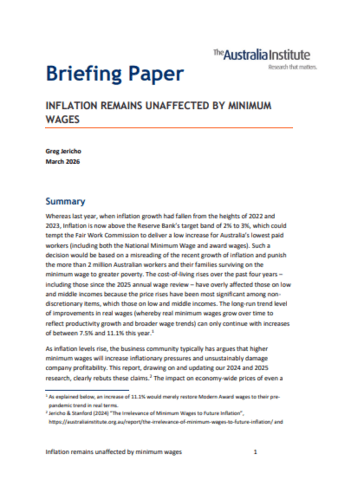
Inflation remains unaffected by minimum wages
This analysis reveals that a fair and appropriate increase to the minimum wage, and accompanying increases to award rates, would not have a significant effect on inflation in Australia. The analysis examines the correlation between minimum wage increases and inflation going back 30 years, and finds no consistent link between minimum wage increases and inflation.
Briefing paper
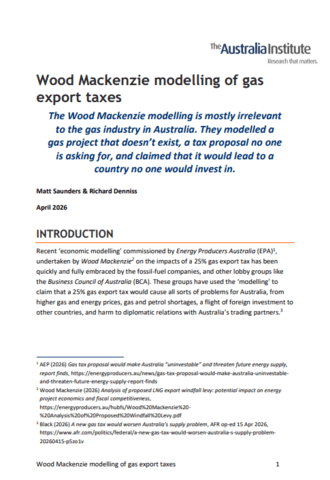
Wood Mackenzie modelling of gas export taxes
Recent economic modelling on the impacts of a 25% gas export tax has been quickly and fully embraced by the fossil-fuel companies, and other lobby groups. This analysis of the modelling finds that it is mostly irrelevant to the gas industry in Australia in modelling a gas project that doesn’t exist.
Report
Economic security in retirement: how life events affect older Australian women
This report shows how Australian women’s economic security in retirement is often shaped by life events such as separation, informal care demands and family violence that can set women back financially. It proposes that with the right policy settings, gender gaps can be addressed to put more women on track for economic security in retirement.