

Income tax
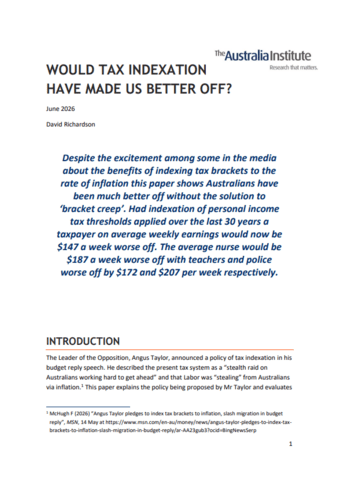
Briefing paper
Would tax indexation have made us better off?
Despite discussion about the benefits of indexing tax brackets to the rate of inflation, this paper shows Australians have been better off without the solution to ‘bracket creep’. The analysis reveals that if the Howard Government had introduced the current Liberal policy of indexing tax brackets to inflation, Australians would be paying significantly more tax...
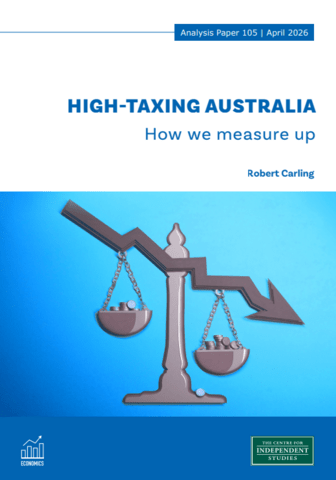
Report
High-taxing Australia: how we measure up
This report explores the veracity of the ‘low-tax’ label in Australia by examining both absolute measures of the tax burden and relative measures based on international comparisons. It proposes that the widely-held claim that Australia is a low-tax country is misleading and risks distorting public policy debates.
Briefing paper
Same amount, different tax: capital income tax calculator
There is a perception that individuals who earn capital income pay much lower tax rates than wage and salary earners. This note explains the complexity of capital taxation using examples from a new online tax calculator. It shows three illustrative situations in which capital income can be either under- or over-taxed relative to labour income.

Briefing paper
Taxing wages 2026: Australia
This summary is based on the results in the OECD Taxing wages 2026 report. It focuses on two of the eight household types examined in the report. The summary presents effective tax rates on labour in Australia and compares these with rates in other OECD member countries.
Briefing paper
Everyone is different: the problem with a flat capital gains tax discount
One objective of Australia’s capital gains tax (CGT) discount is to approximate inflation and tax real gains. But because real returns vary widely across investors, a flat discount systematically misses the mark. Using data on 1.5 million property investments (2008–2025), this paper shows real returns range from losses to strong gains.