

Federal government
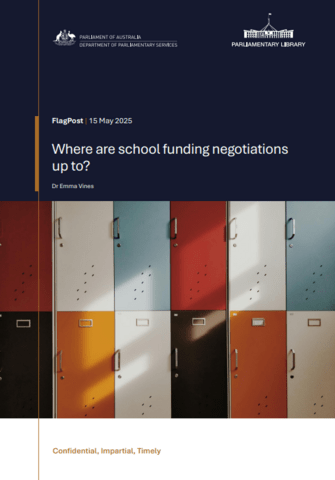
Briefing paper
Where are school funding negotiations up to?
A summary of the status of the national Better and Fairer Schools Agreement. This paper presents what's on the table, the status of the bilateral agreements between the Commonwealth and state and territory governments, and where to from here. It finds that until agreements are finalised, full details about the funding increase will remain unknown.

Discussion paper
Forming power sharing government
An analysis of 25 power sharing parliaments in Australia outlines what crossbencher MPs might demand in exchange for their support and what can be expected of the power sharing parliament that results. It finds that typical areas of negotiation are parliamentary reform, policy reform, more staff and resources and ministerial or presiding officer positions for...
Report
Agenda for change 2025: preparedness and resilience in an uncertain world
A wide-ranging collection of analyses and recommendations to assist the next Australian Government in its deliberations and planning. The structure reflects five interrelated aspects: the need to defend Australia; navigating a new world order; reform of security architecture and policies; securing critical infrastructure; and protection and use of natural resources. Each chapter includes prioritised policy...
Report
Institutional reform stocktake
This report argues major reform to the Commonwealth Parliament and Government is needed to enable brave policymaking. Out of 34 potential reform ideas, the report identifies seven key reform areas that will improve government in Australia, including limiting political donations, fixing parliamentary terms and more rigorous processes for appointing and terminating Secretaries of Commonwealth Departments.
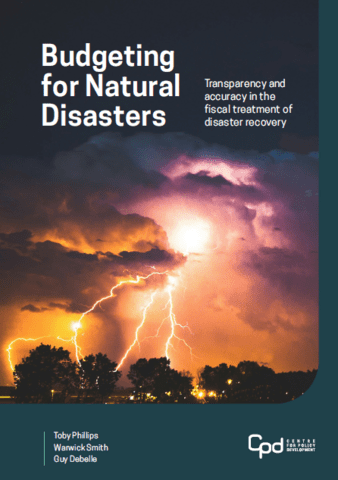
Briefing paper
Budgeting for natural disasters
Natural disasters like bushfires, floods and cyclones aren’t rare or unpredictable. They’re inevitable and should be planned and budgeted for accordingly. But currently, the federal budget only includes disaster recovery spending for events that have already happened. This paper argues that estimated future disaster costs should be included in existing budget lines.