

Family services
Alternative labels
Family support services
Family support
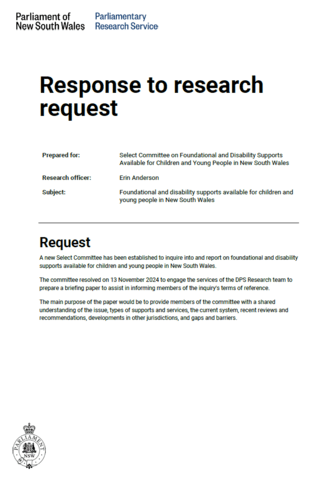
Briefing paper
Foundational and disability supports available for children and young people in New South Wales
This briefing paper describes existing foundational and disability supports available for children and young people in New South Wales. It includes discussion of structural factors that shape the service system; best practice supports and interventions; and frameworks that can be used to evaluate service availability, accessibility and effectiveness.
Video
Applying culturally inclusive principles in evaluation
This webinar focuses on the application of culturally inclusive principles in evaluation, including topics such as data collection methods, cultural timing and the importance of language. It provides insights into how culturally inclusive principles have been applied in real-world evaluation.
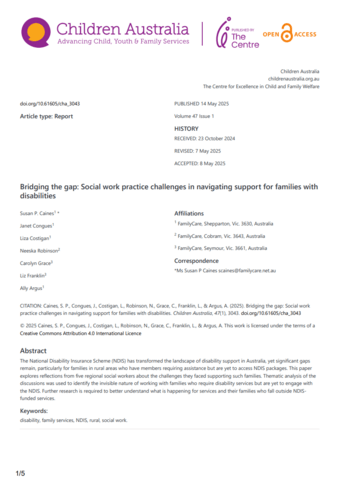
Journal article
Bridging the gap: social work practice challenges in navigating support for families with disabilities
This paper explores reflections from five regional social workers about the challenges they faced supporting families who need assistance but are yet to access National Disability Insurance Scheme (NDIS) packages. It identifies key challenges for practice, including difficulties accessing disability services and lack of guidelines on navigating the NDIS application process for family services staff.

Report
Theorising family and domestic violence work: what is the work and who does it?
This report describes research exploring the domestic and family violence workforce in Australia and the work that it undertakes. It focuses specifically on how the work is done and experienced, why it is done in particular ways, and the structural and organisational contexts that shape this work; with the aim of informing workforce development strategies.
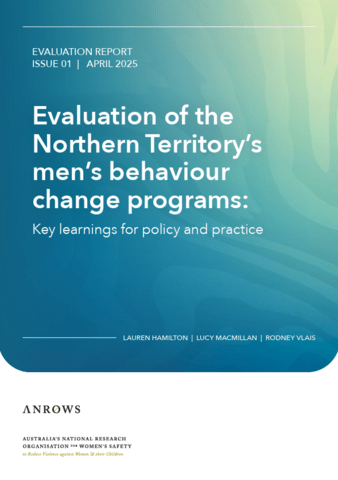
Evaluation
Evaluation of the Northern Territory’s men’s behaviour change programs
This report summarises key learnings from evaluations of two men’s behaviour change programs being delivered in the Northern Territory. Key areas of quality practice found in the programs included prioritising women’s safety support; collaborating with other service system agencies; responding flexibly to risk; working towards cultural safety for Aboriginal participants; and committing to continuous learning.