

Climate change
Alternative labels
Climatic changes
Climate policy
Strategy
Responding to a changing climate: the government’s climate strategy
The New Zealand Government has recently reiterated its commitment to reducing the impacts of climate change and prepare for its future impacts. As part of its response, the government has developed this climate change strategy that sets out how it will deliver on New Zealand’s climate goals.
Report
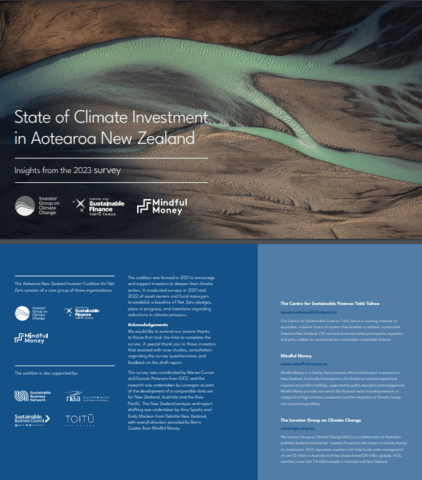
State of climate investment report for Aotearoa New Zealand: insights from the 2023 survey
Despite such climate-related risks to investment returns as extreme weather, new technologies, changes in climate policy and consumer preferences that can disrupt businesses and their supply chains, this survey report shows the investment sector is not yet using its capital and its influence to drive the transition to net zero.
Report
The economics of net zero
This paper sets out key economic concepts associated with the broad climate policy target of net zero emissions that has been adopted by many nations and all Australian jurisdictions. It introduces the conceptual frameworks economists use to understand the causes of and solutions to climate change.
Report
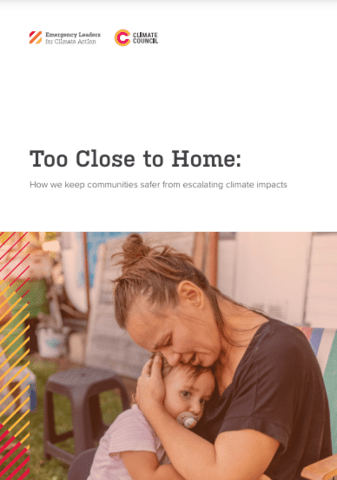
Too close to home: how we keep communities safer from escalating climate impacts
Emergency Leaders for Climate Action is a cohort of former senior Australian fire and emergency service leaders from every state and territory, with deep expertise in disaster planning, preparedness, response and recovery. The content of this report reflects this first-hand experience, along with inputs from experts and practitioners in climate change adaptation. It seeks to...
Journal article
Global health and climate action: achievements and imperatives from COP28
This article explores the public health achievements and the imperatives from COP28, warning that there are a number of loopholes in the conference outcomes regarding the continued use of fossil fuels. The authors assert that policymakers and practitioners must advocate for evidence-based policies that prioritise the wellbeing of all.