

Skilled workforce
Alternative labels
Skilled labour
21st Century work skills
Journal article
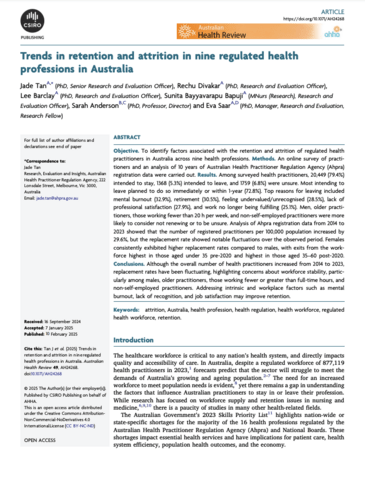
Trends in retention and attrition in nine regulated health professions in Australia
This study finds that while the overall number of health practitioners has increased by almost 30% in ten years, replacement rates fluctuate and certain groups (such as males and older practitioners) are more likely to leave. It highlights burnout, lack of recognition and low job satisfaction as key drivers in leaving or considering leaving the...
Position paper
The big five questions: Australia's platform for action for the 2025 Federal Election
This paper proposes five policy priorities that the Business Council of Australia believe should determine the 2025 Federal Election. Issues covered include the cost of living, housing, net zero emissions, workforce skills and healthcare. For each issue the paper provides background and analysis along with potential policy solutions.

Report
Skills for tomorrow: shaping the future of Australian apprenticeships
The review investigated the support available to help more people start and complete apprenticeships and traineeships. This final report makes 34 recommendations to support high-quality apprenticeships and ensure the incentive system is effective and responsive to the needs of the labour market, apprentices and government.

Report
An essential ingredient: the food supply chain workforce
The report provides a comprehensive view of the challenges faced by the food supply chain workforce. The report presents a series of actionable recommendations, focusing on areas that can be addressed through the national skills system — particularly the three key pillars of vocational education and training, higher education and migration.
Report
The future of jobs report 2025
This report examines how macrotrends impact jobs and skills, and the workforce transformation strategies employers plan to embark on in response, across the 2025 to 2030 timeframe. More than one in five jobs are expected to be fundamentally changed by 2030 as a result of technology change, the green transition, geoeconomic fragmentation, economic uncertainty and...