

Refugee settlement
Alternative labels
Refugee housing
Refugee resettlement
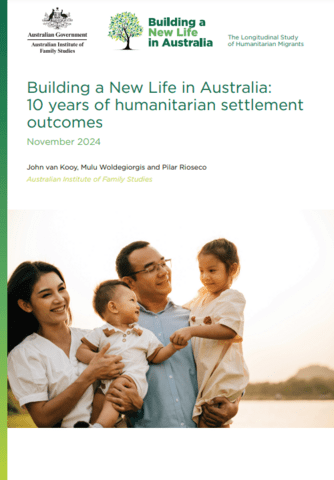
Survey Report
Building a new life in Australia: 10 years of humanitarian settlement outcomes
This report investigates the outcomes for humanitarian migrants in the Building a New Life in Australia study, examining differences between groups and factors over the 10 years of settlement. It shows significant developments across key indicators including labour force participation, language acquisition, education and training, social connection and health. The report highlights the importance of...
Report
Migration, pathway to nation building
This report seeks to provide a comprehensive overview of the main facets of the migration system and to make recommendations in-line with the evidence gathered over the course of the inquiry that complement the Government’s reform agenda. It makes 73 recommendations, covering much of the operations and functions of the migration system and the wider...
Evaluation
Evaluation of the Settlement Engagement and Transition Support (SETS) grants program
An evaluation of the effectiveness, cost, funding, and design elements of a grants program supporting refugees, humanitarian entrants and other vulnerable migrants and communities. It recommends encouraging a diverse provider market, complying with program eligibility criteria, and considering the benefits of adopting a consortium model.
Report
Domestic violence screening and response for refugee women in settlement services
Universal screening for domestic violence, and response, is recommended for women in priority populations and has been implemented in health services across diverse jurisdictions. However, this is untested with refugee women accessing settlement services. The Safety and Health after Arrival (SAHAR) study introduced and evaluated a culturally tailored DV identification and response strategy. The report...
Report
Refugee students’ views about how schools can foster resilience: what helps, what hinders and what needs to change
In this report, the authors privilege the perspectives and voices of students from refugee backgrounds on the school-level relationships, activities and services that enable them to develop resilience, despite their sometimes challenging life experiences as young refugees.