

Social housing
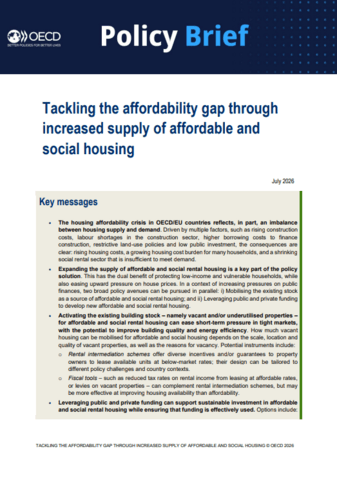
Briefing paper
Tackling the affordability gap through increased supply of affordable and social housing
The housing affordability crisis across OECD countries reflects a persistent mismatch between supply and demand. Expanding affordable and social rental housing is central to addressing these challenges. This brief proposes that policymakers can act along two complementary tracks to ease short-term pressures while laying the groundwork for a more inclusive housing market over the long...
Report
Renting in Victoria – May 2026
Since 2021, Victoria has been driving an ambitious rental reform agenda. However, Victorian renters are facing a combination of pressures that threaten to undermine the impact of this reform work. This report provides insights from 250 community sector workers who are on the frontline of this crisis, supporting Victoria’s most marginalised renters.
Strategy
Homes for Australia: a national plan
The federal government’s comprehensive $47 billion plan to rebuild Australia’s housing system. It identifies policy levers at the Commonwealth, state and territory, and local government levels. The plan sets out six priorities for further reform and directs future housing and homelessness investment.
Report
State of the housing system: 2026
This report provides an independent assessment of current housing system conditions in Australia and the factors shaping outcomes for households. It brings together data, analysis and stakeholder insights to support informed decision-making and to identify where policy settings can be strengthened to improve supply, affordability and access. Six priority areas for housing reform are outlined.
Report
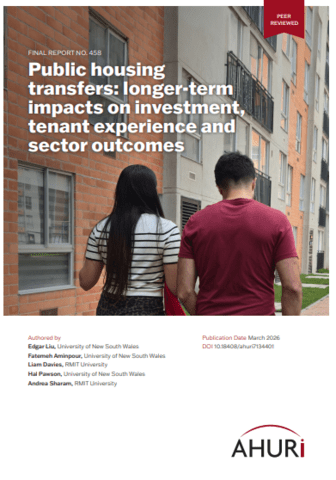
Public housing transfers: longer-term impacts on investment, tenant experience and sector outcomes
This report examines the long-term impacts of transferring public housing to community housing providers in Australia. Public housing transfers have been a prominent government strategy for growing Australia’s community housing sector for decades. Recent changes have resulted in divergent outcomes. Assessing the impacts of different programs informs more effective transfer strategies.