

Report
Report
Do females known for online child sexual exploitation differ from males? Group characteristics and recidivism
Despite increasing research on online child sexual exploitation, limited research compares female and male perpetrators. This study examined 116 females and 116 age-matched males known to police in Victoria for online child sexual exploitation on group characteristics and risk of reoffending. The findings have implications for policy and highlight several important avenues for future research.

Report
What makes climate change mitigation policies work?
This paper presents a meta-analysis of ex-post empirical evidence on the effects of mitigation policies on emissions. It covers a range of pricing and non-pricing mitigation policies across five broad sectors: agriculture, forestry and other land use, buildings, industry, power and transport. The analysis assesses how policy design attributes and country-specific factors impact estimated policy...
Report
Administration of the Freedom of Information Act 1982 by selected entities
The objective of this audit was to assess whether the selected entities’ administration of the Freedom of Information Act 1982 (FOI Act) requests is effective in giving the community access to Australian Government information. Six recommendations were made to the audited entities to improve their administration of FOI Act requests.
Report
Evidence over ideology: protect children by restoring clinical standards in climate anxiety treatment
This report examines how climate-related anxiety is being addressed in clinical and educational settings. It critiques emerging psychological responses which may inadvertently reinforce distress rather than alleviate it. The report proposes practical steps for schools to ensure that environmental issues are taught in developmentally appropriate ways.
Report
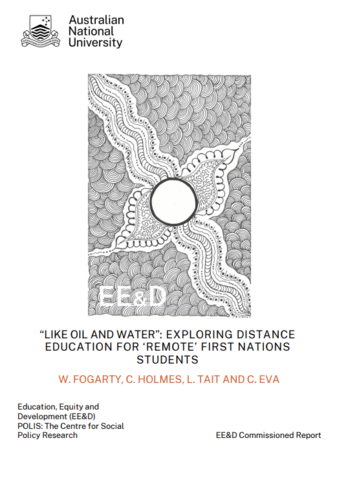
“Like oil and water”: exploring distance education for First Nations students
This interjurisdictional report critically examines the provision of distance education for First Nations students in ‘remote’ Australia, highlighting systemic barriers, cultural mismatches and opportunities for reform. It reveals how distance education models, founded in settler-colonial pedagogies and reliant on digital infrastructure, often fail to meet First Nations learners’ needs.