

 SHARE
SHARE
Building Access end of project report: findings and recommendations
| Attachment | Size |
|---|---|
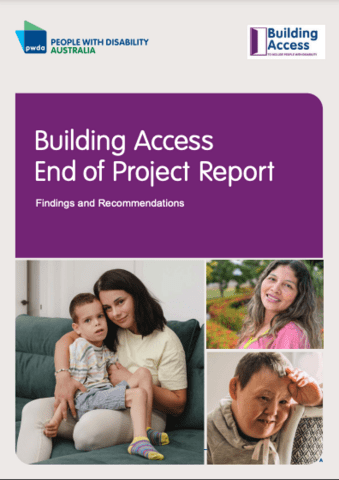
 Building Access end of project report: findings and recommendations Building Access end of project report: findings and recommendations
|
1.48 MB |
The Building Access project, managed by PWDA, is an innovative initiative enabling domestic and family violence (DFV) services to better meet the needs of women and children with disability. The project is not only unique in addressing and increasing the accessibility of DFV services across NSW but is also of national significance.
The Building Access Project seeks not only to improve the accessibility of frontline DFV services but also to advance the fundamental human rights of women with disability (WWD).
The two phases of the Building Access Project have now concluded and PWDA has released the Building Access End Of Project Report.
This report highlights the significant barriers women and children with disability face when accessing domestic and family violence services. The report outlines the roadmap forward to ensure these essential services are safe, inclusive and accessible to all women and children with disability.
The key findings of the report revealed that of the women with disability interviewed:
- 100 per cent have experienced fear and mistrust of services and authorities.
- 71 per cent would avoid reporting incidents of DFSV to police in the future.
- 57 per cent avoided seeking support due to negative past experiences including dismissal, discrimination and experiencing further harm.
- 28 per cent reported fear of having children removed from their care if they accessed services.
The report clearly indicates that inclusive policies and practices produce better outcomes for WWD, both as staff and clients, of DFV services. These policies and practices, along with accessibility audits and disability awareness training create an environment of attitudinal accessibility. This means notable and meaningful organisational change with accessibility integrated into their organisational structure, planning and delivery, and WWD experiencing violence getting the support they need.
