

 SHARE
SHARE
Buildings as batteries: how buildings can support the clean energy transition
| Attachment | Size |
|---|---|
 Buildings as batteries: how buildings can support the clean energy transition Buildings as batteries: how buildings can support the clean energy transition
|
969.16 KB |
Load shifting, that is moving the time of day at which electricity is used, is possible in commercial and institutional buildings because they can act as 'thermal batteries' that store energy in the form of warmth in winter or coolness in summer. They can use electricity when it is relatively cheap and reduce their demand when prices are higher.
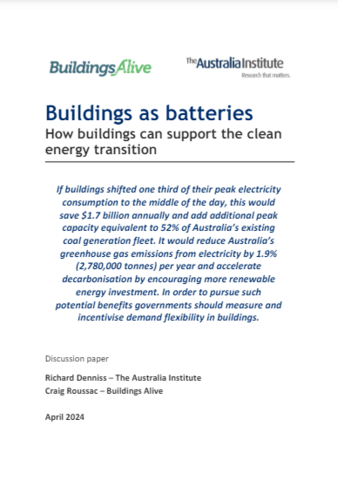
The authors of this discussion paper assert that if buildings shifted one third of their peak electricity consumption to the middle of the day, this would save $1.7 billion annually and add additional peak capacity equivalent to 52% of Australia’s existing coal generation fleet. It would reduce Australia’s greenhouse gas emissions from electricity by 1.9% (2,780,000 tonnes) per year and accelerate decarbonisation by encouraging more renewable energy investment.
In order to pursue such potential benefits, governments should measure and incentivise demand flexibility in buildings.
