

Report
 SHARE
SHARE
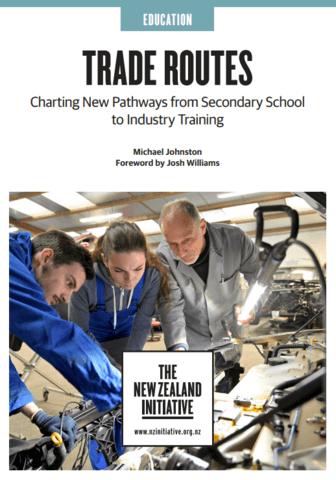
Trade routes: charting new pathways from secondary school to industry training
Publisher
Transition to work
Trades
High school students
Vocational education and training
Workplace training
New Zealand
Resources
| Attachment | Size |
|---|---|
 Trade routes: charting new pathways from secondary school to industry training Trade routes: charting new pathways from secondary school to industry training
|
1.57 MB |
|
Report summary: trade routes
|
479.71 KB |
Description
This report examines the challenges and opportunities for pathways from secondary education to industry and trades training in New Zealand. It highlights systemic issues and proposes comprehensive reforms to strengthen these pathways. It highlights how trades academies, gateway programmes and other vocational education initiatives operate as fragmented 'add-ons' rather than forming a coherent pathway equivalent to trades and industry training.
Key findings
- Nearly twice as many New Zealand school leavers fall into unemployment compared to those who undertake workplace-based learning.
- 11% of 16-19-year-olds are not in employment, education or training compared to 6% in workplace-based learning.
- Current trade and industry training initiatives for secondary students operate as fragmented 'add-ons' rather than forming a coherent pathway equivalent to university preparation.
- In Germany, approximately half of all school leavers participate in the country’s ‘dual training’ apprenticeship system.
Key recommendations
- Unify existing vocational programmes into a clear alternative pathway to university.
- Workforce Development Councils to be elected by industry bodies rather than appointed by ministers.
- Expand the role of Workforce Development Councils to include advising on curriculum development for schools offering industry training pathways.
Publication Details
Copyright:
The New Zealand Initiative 2025
License type:
CC BY
Access Rights Type:
open
Post date:
24 Mar 2025
