

 SHARE
SHARE
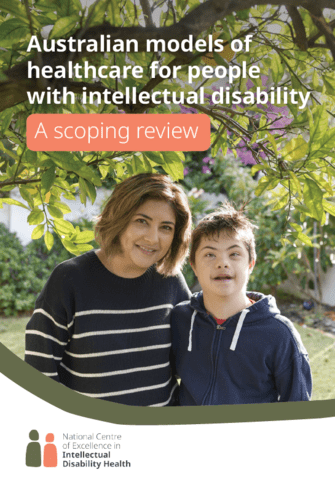
Australian models of healthcare for people with intellectual disability

Approximately 2% of the Australian population lives with intellectual disability. They experience inequities in accessing
healthcare and poorer health outcomes compared to their peers without intellectual disability. To improve health services, this review was undertaken to understand how current practices work. Healthcare models were analysed to identify components that were associated with positive outcomes.
Common components across models of care included person-centred care, reasonable adjustments, capacity building, health sector care-coordination, cross-sectoral care coordination and multidisciplinary teamwork.
The findings of the review improves understanding of current clinical practices and provides insights into ways that healthcare services can be improved for people with intellectual disability.
Recommendations
- Fair remuneration for GPs to administer comprehensive healthcare assessments and follow up.
- Investigate how nursing, allied health and Aboriginal and Torres Strait Islander health staff can help with primary health tasks.
- Develop standardised intellectual disability health training.
- Implement standardised intellectual disability health training.
- Measure effectiveness and cost effectiveness of models of care including care coordination.
- Measure the effectiveness and cost effectiveness of models of care including cross sectoral coordination.
- Prioritise funding of evidence-based care coordination.
- Prioritise funding of evidence-based cross-sectoral care coordination.
- Adapt existing patient reported experience measures (PREMs) and patient reported outcome measures (PROMs), and/or develop new ones where needed, for future evaluations across diverse settings.
- Evaluate the experiences of people with intellectual disability and their families, clinicians, and service planners for transition services, and propose and test solutions.
- Review the uptake and cost-effectiveness of Telehealth services in Australia, across healthcare settings, e.g. GP, allied health, Healthdirect, virtual emergency departments.
