

 SHARE
SHARE
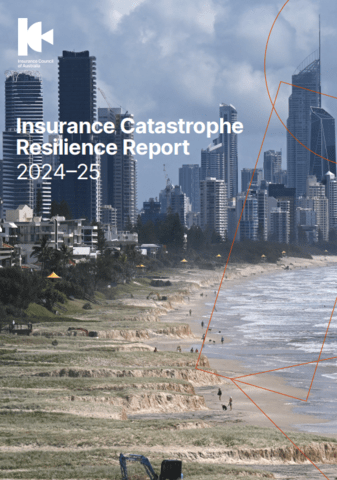
Insurance catastrophe resilience report 2024–25

The report provides updated data on the cost of extreme weather over the past 12 months in Australia, with insured losses reaching almost $2 billion across three events – the North Queensland Floods ($289m), Ex-Tropical Cyclone Alfred ($1.43b), and the Mid North Coast and Hunter floods ($248m).
While extreme weather is costing developed nations more with each passing decade, Australians are paying an outsized price. Per person, Australians have consistently shouldered higher economic and insured losses than a range of other developed nations, except the United States.
Worsening extreme weather, population growth, ongoing development in at-risk locations, rising asset values, labour and supply chain shortages, and taxes on insurance are all placing significant upward pressure on insurance premiums. These pressures are most acutely felt by those facing the greatest risks from extreme weather. As a result, the gap between those with adequate insurance and those without is widening – leaving more Australians vulnerable and increasing demands on public resources.
Key policy recommendations
- Establish a Flood Defence Fund to protect Australia’s most at-risk communities.
- Increase investment in resilience and mitigation funding, as part of a 10-year rolling program.
- Reform state taxes and levies on insurance products that increase the cost of insurance.
- Standardise natural disaster recovery arrangements and implement the Independent review of Commonwealth disaster funding recommendations.
- Prevent development of homes in high-risk locations through a national planning standard.
- Strengthen building standards to ensure new homes can withstand extreme weather events.
- Fund improved data standards to help inform resilience mitigation and put downward pressure on premiums.
