

Report
 SHARE
SHARE
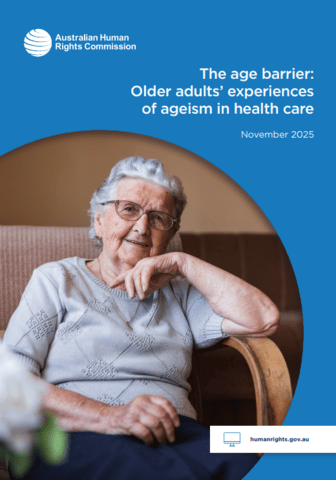
The age barrier: older adults’ experiences of ageism in health care
Publisher
Social impact
Health services accessibility
Health impacts
Age discrimination
Older people
Bias
Australia

Description
This report looks at how ageism affects older Australians when they access healthcare. Many patients noted they feel dismissed, spoken over or treated as 'just a number'. These attitudes can lead to missed diagnoses, poorer health outcomes and even people avoiding care.
The findings show that ageism is perceived not only in personal interactions, but also within the practices and policies of health institutions. These perceptions shape older people’s experiences of health care and affect their health outcomes. Consequences are serious for people and the system.
Key findings
- Ageism is experienced across the health system, from frontline interactions to systemic policies.
- Common experiences include: age-based assumptions by health professionals and limited involvement in care decisions.
- Ageism intersects with other discrimination, compounding disadvantage for some groups.
- Structural barriers persist, including age limits on services and exclusion from medical research.
- Internalised ageism can influence health behaviours, leading older people to avoid care or dismiss symptoms as ‘just old age’.
- Person-centred care is critical, according to older people.
Key recommendations
- Collaborative reform: partnering within the health sector to review clinical guidelines, improve training and co-design age-inclusive models of care.
- Raising awareness and challenging bias through targeted education and ageism awareness training for health professionals.
- Strengthening the evidence base by investing in research to measure the impact of ageism and its intersection with other forms of discrimination.
The report is accompanied by a short video outlining the key findings.
Publication Details
ISBN:
978-1-921449-18-5
Copyright:
Australian Human Rights Commission 2025
License type:
CC BY
Access Rights Type:
open
Post date:
20 Nov 2025
