

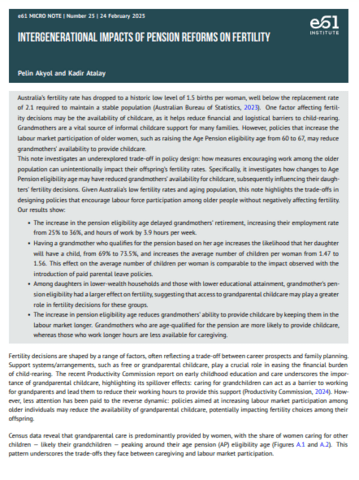
Briefing paper
Intergenerational impacts of pension reforms on fertility
This paper investigates an underexplored trade-off in policy design: how measures encouraging work among the older population can unintentionally impact their offspring’s fertility rates. It finds that the unintended impact on the birth rate is comparable to that observed with the introduction of paid parental leave policies.

Briefing paper
Cost of living crisis relief: insights from the COVID-19 financial support policies
This paper examines how two major policies responding to the COVID-19 pandemic affected the wellbeing of eligible recipients, one that increased liquidity by releasing personal savings and one that increased wealth through a government transfer. The findings suggest the former raised life satisfaction while the latter did not.
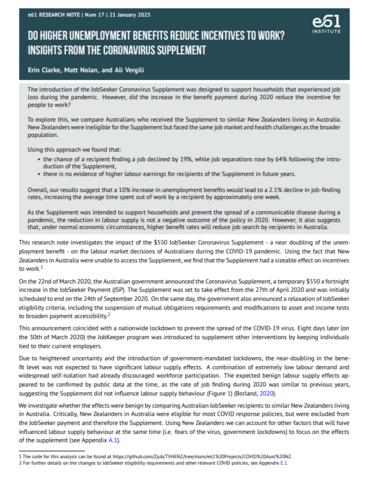
Briefing paper
Do higher unemployment benefits reduce incentives to work?
The JobSeeker Coronavirus Supplement was designed to support households that experienced job loss during the COVID-19 pandemic. This paper found that these higher benefit payments lead to a change in labour market behaviour, reducing the incentive for people to work. It provides three lessons from the research.
Report
The lucky country or the lucky city? The location of economic opportunity in Australia
This report follows the trajectories of workers of different occupations, ages, and locations to better understand how wages and housing costs vary between the cities and regions. It also identifies the migration flows within Australia occurring in response to changing locations of opportunity finding overseas immigration has offset the worker exodus from the cities
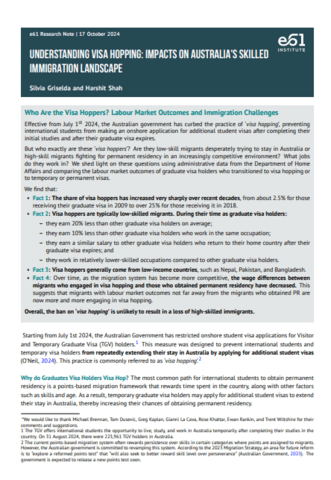
Briefing paper
Understanding visa hopping: impacts on Australia's skilled immigration landscape
This paper investigates the impacts of recent legislation designed to reduce 'visa hopping' in Australia by reducing onshore applications from existing visa holders. The paper forecasts the impact on Australia's skilled labour market by analysing demographic data, finding that the reform will predominately impact low-skilled migrants from low-income countries.