

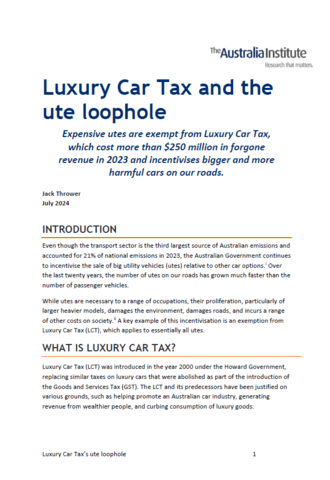
Briefing paper
Luxury Car Tax and the ute loophole
This paper argues tax breaks for large, American-style utes cost Australians over $250 million in foregone revenue in 2023. A loophole in Australia’s tax law effectively subsidises large utes such as Ram and Chevrolet pick-up trucks by avoiding the Luxury Car Tax (LCT) that other imported vehicles pay, regardless of if the vehicles are used...
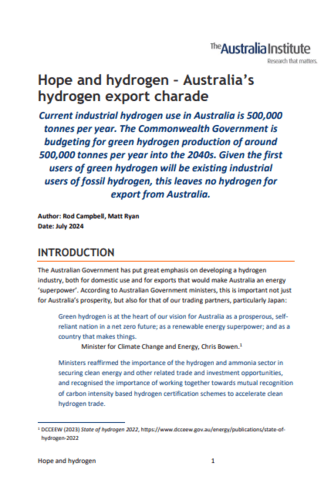
Briefing paper
Hope and hydrogen – Australia’s hydrogen export charade
The Australian Government is budgeting for green hydrogen production of around 500,000 tonnes per year into the 2040s. Given the first users of green hydrogen will be existing industrial users of fossil hydrogen, this leaves no hydrogen for export from Australia. This briefing note formed part of the Australia Institute’s submission to the Hydrogen Production...
Discussion paper
Power sharing in Australian parliaments: why the hang up about hung parliaments?
Despite occasional fearmongering about ‘hung’ parliaments, minority government and 'coalitions of chaos', the reality is that power sharing governments are common in Australia. This discussion paper examines the history of power sharing in parliaments around Australia.
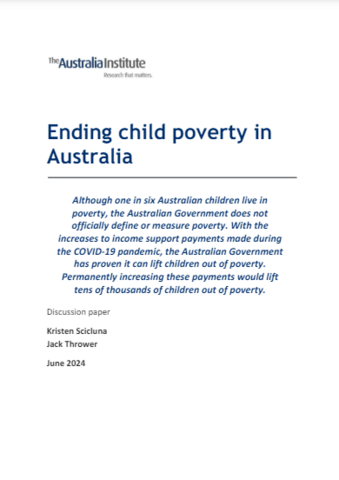
Discussion paper
Ending child poverty in Australia
Although one in six Australian children live in poverty, the Australian Government does not officially define or measure poverty. With the increases to income support payments made during the COVID-19 pandemic, the federal government has proven it can lift children out of poverty. The authors of this paper argue that permanently increasing these payments would...
Discussion paper
Who benefits? The high cost of super tax concessions
This paper shows superannuation tax concessions help high income earners avoid tax, exacerbate income and gender inequality and come at a huge cost in foregone revenue, and recommends ending, or at least limiting, superannuation tax concessions for the top 10% of earners and those whose high super balances do not meet the asset criteria for...