

Report
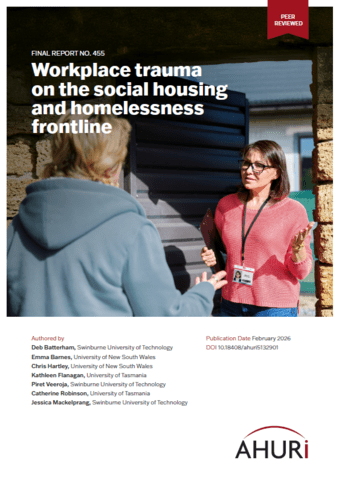
Workplace trauma on the social housing and homelessness frontline
People working in the housing and homelessness sector are exposed to significant trauma in their role as service providers of last resort. This research explores workplace trauma in Australia’s social housing and homelessness services – including its extent, causes and impacts. It examines practices to address this trauma, options to mitigate it and guiding principles...
Report
Shared equity programs in Australia: features, impacts and growth potential
This research looks at Australian shared equity schemes, which are programs where governments or other organisations help people buy a home in exchange for part-ownership of the property. It compares the advantages, disadvantages and unintended consequences of different models, and creates an evidence-base to support the design of future government-led shared equity programs.
Report
Small-area analysis and projections of social housing change
This report explores concentrations and density of social housing relative to local amenities and services across Australia – providing an overview of the distribution, access and value of social housing stock. The research also developed an Amenity Index. The research demonstrates the need for more social housing with good access to local amenities.
Report
Planning for a two-tenure future
Three out of five Australian renters say they expect they will never own their own home — a significant shift that requires rethinking of tax and housing systems so that governments’ support all Australians in a two tier housing market (of owners and renters) into retirement. The policy challenge is to make renting a good...
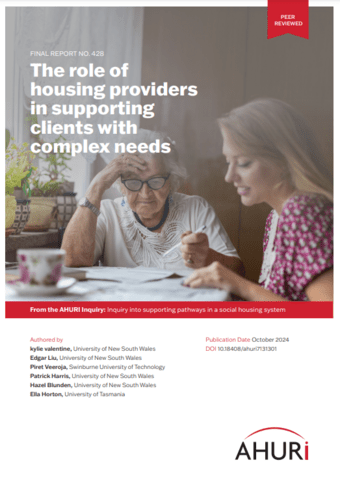
Report
The role of housing providers in supporting clients with complex needs
This report asserts the supply of more housing options for people on social housing waiting lists should be given increased priority, as longer wait times and uncertain or unsafe housing creates further mental health challenges for applicants already facing increased health needs.