

ADHD
Alternative labels
Attention deficit hyperactive disorder
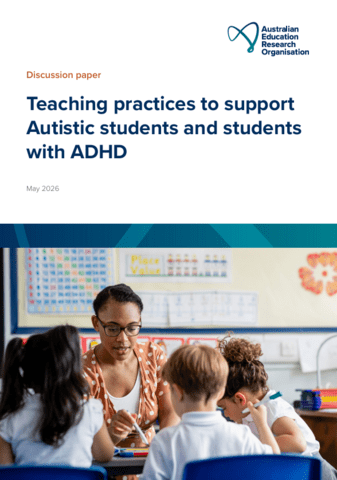
Discussion paper
Teaching practices to support Autistic students and students with ADHD
This discussion paper synthesises research on evidence-based teaching practices that support Autistic students and students with attention deficit/hyperactivity disorder (ADHD) with learning in school settings. It outlines what the current evidence for these cohorts of students indicates, what’s emerging and the implications for policy and practice in Australian schools.
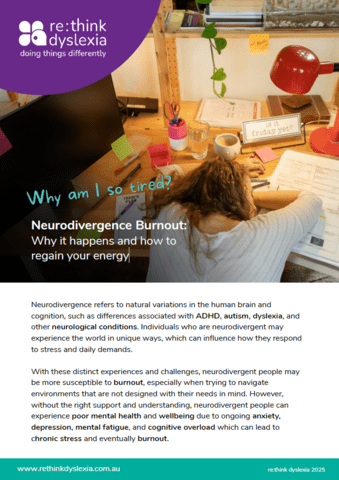
Fact sheet
Neurodivergence burnout
This factsheet outlines the causes of burnout for neurodivergent people, how to prevent it, and the steps workplaces can take to create safer, more supportive environments. It also provides practical guidance on recovering from burnout, rebuilding energy, and accessing appropriate support to improve wellbeing and long‑term sustainability.
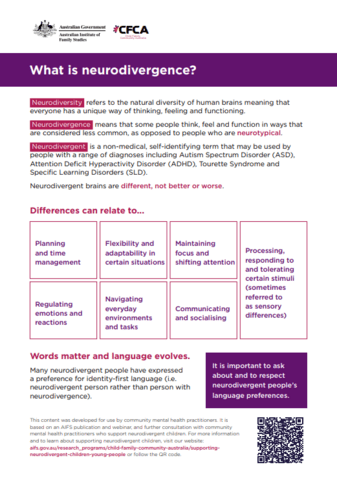
Fact sheet
What is neurodivergence?
A short accessible information sheet that defines key terms relating to neurodivergence and addresses some common misconceptions. It is accompanied by practical guides on supporting neurodivergent children and young people. The aim is to enhance readers’ basic neurodivergence literacy, lay the groundwork for further learning and promote informed discussions about neurodiversity.
Video
How to use neurodivergent-affirming strategies to support child mental health
Children with autism or ADHD have specific strengths but we live in a world designed for neurotypical brains. This can be a difficult and disabling experience for many children. This webinar explores how practitioners, educators and parents can use neurodivergent-affirming strategies to better support the mental health and wellbeing of autistic and ADHD children.
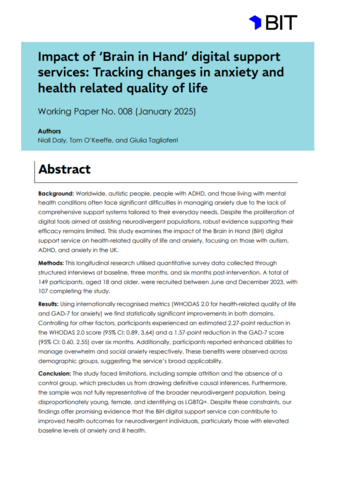
Working paper
Impact of ‘Brain in Hand’ digital support services
An evaluation of Brain in Hand – a UK support service for people with autism, ADHD and mental health conditions combining on-demand human support and digital tools. Users of the service reported improved health-related quality of life, reduced anxiety, and better management of social anxiety and feelings of overwhelm which suggests digital tools can play...