

First Peoples
Alternative labels
First Nations people
Indigenous
Indigenous peoples
Report
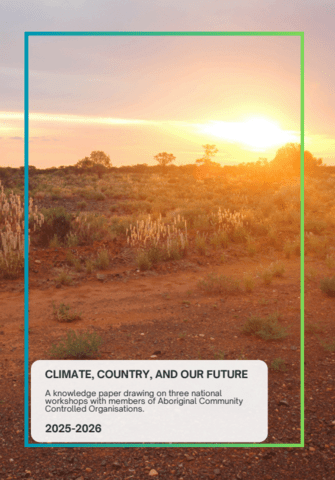
Climate, Country, and our future
This report synthesises the findings from a national knowledge series examining First Nations climate leadership with Aboriginal Community Controlled Organisations across Australia. It draws on participant contributions from across Queensland, Western Australia, Tasmania, Victoria and New South Wales, spanning remote, rural and regional contexts. The report's recommendations address four interdependent requirements.
Report
Snapshot: the impact of Reconciliation Action Plans in 2025
An annual report that measures the impact that organisations with Reconciliation Action Plans (RAPs) are having across Australia. The 2025 report shows the growing role of RAPs in driving change across workplaces, institutions and communities.
Report
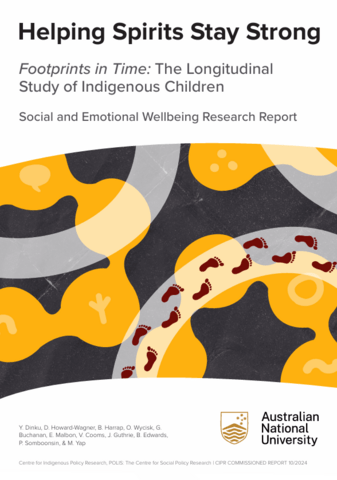
Footprints in Time: Longitudinal Study of Indigenous Children – social and emotional wellbeing research report
This report on the social and emotional wellbeing of Aboriginal and Torres Strait Islander children and youth proposes and explores a novel approach to measuring social and emotional wellbeing, inspired by a holistic construct developed by a First Nations scholar-led team.

Journal article
Designing mentorship for constrained systems
Mentorship is widely recognised as a valuable strategy for supporting health professionals. This article examines how mentorship can be designed for constrained health systems, including in rural and remote settings. It proposes a systems-oriented perspective that positions mentorship as part of routine practice rather than as a separate professional development activity.
Report
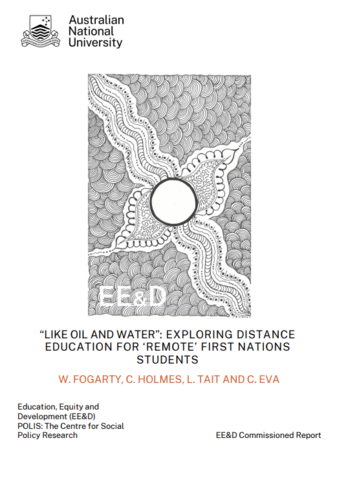
“Like oil and water”: exploring distance education for First Nations students
This interjurisdictional report critically examines the provision of distance education for First Nations students in ‘remote’ Australia, highlighting systemic barriers, cultural mismatches and opportunities for reform. It reveals how distance education models, founded in settler-colonial pedagogies and reliant on digital infrastructure, often fail to meet First Nations learners’ needs.