

Disaster planning
Report
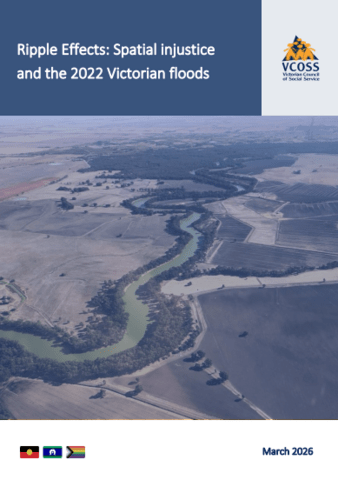
Ripple effects: spatial injustice and the 2022 Victorian floods
This report presents a comprehensive quantitative analysis of spatial injustice – the unequal opportunities and resources that exist due to location – and the impacts of the 2022 Victorian floods. It highlights that more needs to be done to support those most impacted by disasters, and to address the risk that future emergencies will further...
Report
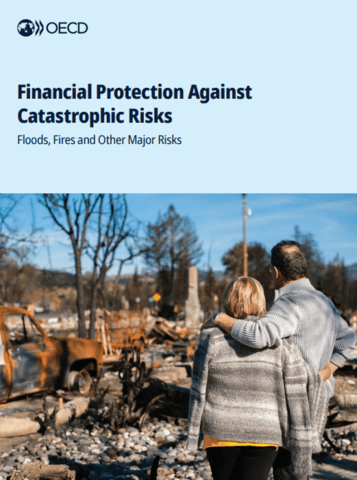
Financial protection against catastrophic risks
This report aims to help governments strengthen financial resilience against catastrophic risks. It provides a framework to assess the need for government-supported financial protection and the advantages and disadvantages of the main approaches to offering such support. It applies this framework to three types of large-scale risks: natural hazards, infectious disease outbreaks and cyber-attacks and...

Report
Report on government services 2026: emergency management (part D)
The report on government services provides information on the equity, effectiveness and efficiency of government services in Australia. This report provides performance reporting for emergency services for fire and other events. It includes a summary of government expenditure in the sector and a case study on flood mitigation, prevention and preparedness efforts.
Report
From wildfire risk to resilience: the investment case for action
Wildfires are now outpacing existing suppression systems and have become one of the most destructive and costly climate-driven risks globally. This white paper highlights that continuing to prioritise suppression and post-disaster response is no longer sufficient. It presents a framework for shifting towards prevention-focused, long-term wildfire resilience by making risk reduction measurable, priceable and financeable.
Report
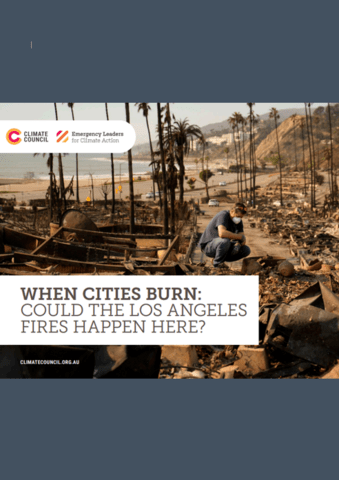
When cities burn: could the LA fires happen here?
At least 6.9 million Australians living on the expanding fringes of our capital cities could be at risk from urban fires supercharged by climate pollution this report finds. It details how climate pollution is turbo-charging dangerous fire conditions.