

Teaching methods
Report
Sharpening teacher tools: creating an evidence-based standard for quality instructional materials
High-Quality Instructional Materials (HQIM) are defined as educational resources that effectively support student learning by aligning with curriculum standards and applying evidence-based teaching and learning approaches. This paper examines insights from international policy examples for curriculum-aligned HQIM.
Journal article
Curriculum in special school contexts: a collaged framework for personalised, individual student learning
This article presents a theorisation of how some special school educators interpret and reinterpret standardised curriculum to support the individual learning needs of students with moderate to profound disabilities through operationalising a theoretical framework of personalised learning.
Journal article
Librarians' roles in supporting students' mental health through teaching practices
Mental health and well-being is of increasing concern on college campuses. Grounded in feminist pedagogy and an ethic of care, this study asks what roles instruction librarians perceive themselves as having in supporting student mental health and what strategies they use in the classroom to address student affect and emotions.
Guide
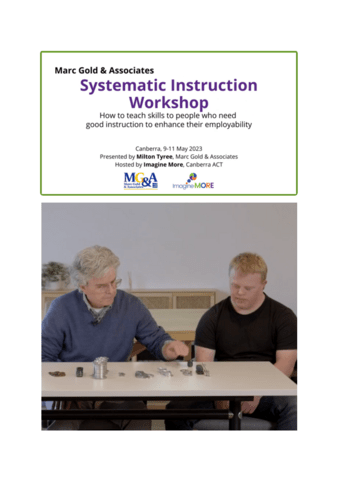
Systematic instruction
A guide on teaching skills to people with disability using Systematic Instruction. It includes a video presentation demonstrating how systematic instruction can be used within the Customised Employment framework.

Report
Effective teaching practices and student support services in online VET
The aim of this research was to identify the teaching practices and student support services that facilitate the successful online delivery of vocational education and training, including in blended delivery.