

Australia
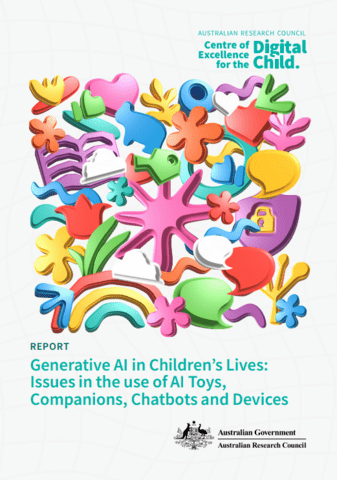
Report
Generative AI in children’s lives: issues in the use of AI toys, companions, chatbots and devices
This report offers an accessible way for parents, educators, policymakers and anyone in children’s lives to think about some of the challenges that come from younger children’s use and engagement with artificial intelligence (AI)-powered tools, devices and toys, ranging from AI chatbots and companions to AI teddy bears.
Report
‘What works’ in employment services and supports for mature-age jobseekers with acquired disability and health conditions
This report reviews Australian and international evidence to synthesise ‘what works’ in employment services and supports to move unemployed people aged over 45 with disability and health conditions into work, and what could work better in the current landscape to improve the quantity and quality of employment outcomes for that group in Australia.
Submission
Response to the exposure draft of the News Media Bargaining (Administration) Act 2026
This submission addresses draft Australian legislation establishing a News Bargaining Incentive, prepared by University of Canberra and RMIT researchers. Drawing on extensive regional interviews, national surveys, and stakeholder engagement, it proposes five recommendations: include AI platforms, strengthen incentives for smaller publishers, raise agreement thresholds, require multi-year deals, and enhance transparency to support public interest journalism.
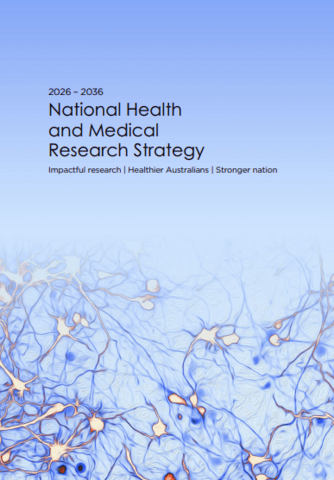
Strategy
2026 – 2036 National health and medical research strategy
The strategy sets out a 10-year vision for strengthening Australia’s health and medical research system. Its scope encompasses all elements of health and medical research across the Commonwealth, states and territories, industry, academia, health professionals, consumers, community and philanthropy. The strategy sets out the vision, goals and focus areas.
Briefing paper
Between backyards and nakamals: shifting Australia-Vanuatu relations
Australia’s strategic anxiety and emphasis on security in the Pacific Islands region have increasingly dominated bilateral affairs in the past decade. This paper argues the result has been a reconfiguration of valued development cooperation, risking a neglect of historical and contemporary reciprocal relations, which in turn can undermine diplomatic trust-building.