

Empowerment
Report
Strengthening outcomes through Aboriginal-led co-design: lessons learnt from co-design in practice
The paper captures findings and recommendations from work on the future of co-design practice with Aboriginal and Torres Strait Islander peoples. It provides an update on consultations, as well as case studies that illustrate key approaches to authentic co-design. The paper presents a call to action for governments to ensure dramatic improvements in co-design practices.
Report
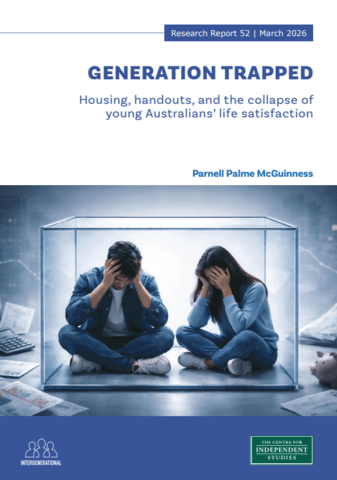
Generation trapped: housing, handouts, and the collapse of young Australians’ life satisfaction
Life satisfaction is trending down for young people in Australia and the West. This paper examines the lives, aspirations, values and perceived barriers of Australians aged 18–34. It creates a foundation for evaluating existing policy and developing new policy to support the priorities and goals of these young Australians.
Report
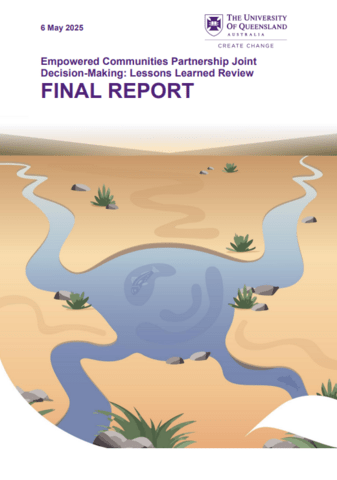
Empowered Communities Partnership joint decision-making: lessons learned review
The Empowered Communities (EC) Partnership is an Indigenous designed and led place-based reform partnership and aims to improve socioeconomic outcomes and close the disparity gap in two to three generations. This review finds EC shared decision-making is an effective model for empowering Indigenous people. The review’s findings and recommendations provide a case for change.
Policy
First Nations Economic Partnership
The First Nations Economic Partnership is an agreement with the: Coalition of Aboriginal and Torres Strait Islander Community‑Controlled Peak Organisations, First Nations Economic Empowerment Alliance and the Australian Government. The purpose of the Economic Partnership is to advance the economic empowerment and lasting economic security for First Nations peoples, communities and organisations.
Journal article
Women migrants in Western Australia: case studies of resilience and empowerment
This article presents findings from an exploratory research using descriptive case studies of 12 migrant women in Western Australia to better understand the ways in which women migrants, through alliances and collaboration, cross borders of learning and work towards generating change and transformation.