

 SHARE
SHARE
The Accredited Employer Work Visa scheme in Aotearoa New Zealand: a human rights review
| Attachment | Size |
|---|---|
 The Accredited Employer Work Visa scheme in Aotearoa New Zealand: a human rights review The Accredited Employer Work Visa scheme in Aotearoa New Zealand: a human rights review
|
2.11 MB |
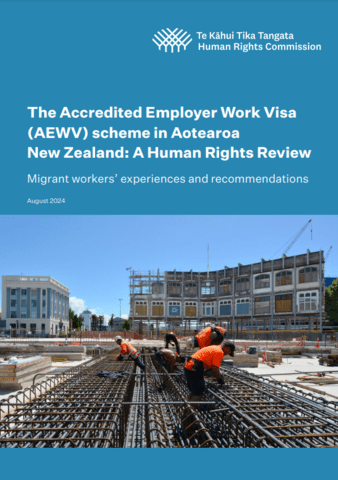
From non-existent jobs and wages to the potential for human trafficking – migrant workers are being exploited under the existing Accredited Employer Work Visa scheme. This review sets out a range of urgent human rights concerns and provides recommendations for improving the scheme.
The AEWV scheme is the main temporary work visa for Aotearoa New Zealand. It is intended to make it easier for employers to hire skilled migrants where there is a genuine skill or labour shortage in Aotearoa. Under the scheme, skilled migrants can get a visa to come to Aotearoa to work for a specific accredited employer. Previous reviews have outlined many instances of migrant exploitation, including reports that migrant workers were being forced to work illegally as part of organised crime networks. This review builds on previous work by addressing the underlying human rights risks.
The review identifies and addresses significant risks to the following human rights:
- the right to equality and non-discrimination
- the right to just and favourable working conditions
- the right to an adequate standard of living
- the right to health
- the right to freedom of association
- the right to an effective remedy and access to justice.
Key recommendations include:
- a full review of the AEWV scheme to ensure it has a strong focus on Te Tiriti o Waitangi and human rights. This is necessary to eradicate exploitation and minimise human rights risks present in the scheme
- untying the AEWV visa from a specific accredited employer so workers can more easily change employers if they wish
- requiring and enforcing ethical recruitment standards
- providing better support and effective
- redress for migrant workers experiencing
- human rights risks and violations
- more and better scrutiny of and accountability for accredited employers
- promoting and funding initiatives that have a proven record of protecting workers’ human rights
- implementing modern slavery legislation to better protect migrant workers from human trafficking and exploitation.
