

Report
 SHARE
SHARE
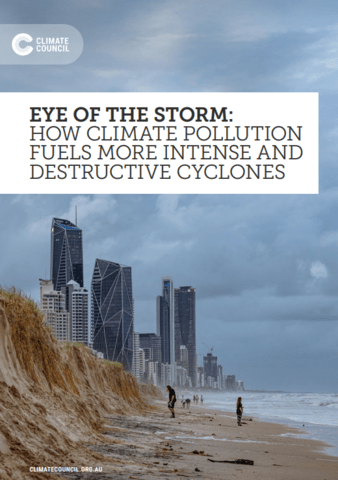
Eye of the storm: how climate pollution fuels more intense and destructive cyclones
Publisher
Climate change
Carbon emissions
Extreme weather events
Global warming
Ocean warming
Floods
Climate risk
Australia
New South Wales
Queensland
Resources
| Attachment | Size |
|---|---|
 Eye of the storm: how climate pollution fuels more intense and destructive cyclones Eye of the storm: how climate pollution fuels more intense and destructive cyclones
|
3.42 MB |
Description
As oceans heat up, Australians are expected to experience fewer cyclones but those that reach Australia are predicted to be more extreme with greater impacts. In other words, the cyclones faced now will be more devastating as a result of climate change. In 2025, Tropical Cyclone Alfred was a prolonged and dangerous event that caused torrential rains, coastal flooding and powerful winds across large swathes of the country, with communities impacted as far north as Hervey Bay and as far south as Coffs Harbour over 600km away.
The intensity and devastation of this event was fuelled by climate pollution in three ways.
- Record hot ocean temperatures in the Coral Sea over summer 2024-25 helped fuel its intensity.
- Storm surges and wind-driven waves from Tropical Cyclone Alfred rode on higher seas, made worse by climate change.
- A hotter, wetter atmosphere made the extreme rainfall worse than it otherwise would have been.
Key findings
- Tropical Cyclone Alfred was more intense and damaging due to climate pollution.
- Many of the places hit by Tropical Cyclone Alfred are the same places still rebuilding and recovering from recent major flooding events.
- Tropical Cyclone Alfred was a slow-moving storm that gave communities and emergency responders time to prepare. But its prolonged nature meant that the impacts lasted longer, resulting in widespread damage.
- Weather is now more chaotic, unpredictable and dangerous due to climate pollution, which presents challenges for everyone.
- The future safety and prosperity of Australians depends on how rapidly climate pollution is cut this decade.
Publication Details
ISBN:
978-1-923329-12-6
Copyright:
Climate Council of Australia Ltd 2025
License type:
CC BY
Access Rights Type:
open
Post date:
20 Mar 2025
