

 SHARE
SHARE
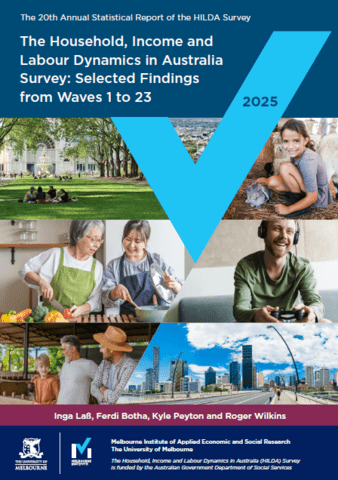
The Household, Income and Labour Dynamics in Australia survey: selected findings from waves 1 to 23

Established in 2001, the Household, Income and Labour Dynamics in Australia (HILDA) Survey is a nationally representative longitudinal study of Australian households. It seeks to provide longitudinal data on the lives of Australian residents. This report presents brief statistical analyses of the first 23 waves of the study, which were conducted between 2001 and 2023.
An important theme of this year’s report is how Australians are faring in the aftermath of the COVID-19 crisis and the sharp rise in the cost of living that has followed it. The latest findings reveal that economic pressures and social shifts are changing how Australians approach key life decisions.
The report explores 11 aspects of Australians' lives and how they have changed over time:
- households and family life
- household economic wellbeing
- the labour market
- retirement
- housing insurance
- bodily pain
- psychological distress
- blood donation
- friendships
- time stress.
Key findings
- Compared to 20 years ago, Australians aged 60–69 are working longer.
- Fertility intentions have seen a notable shift. For the first time, the average number of children desired by men has fallen below two. Women's preferences have also declined.
- Social connections appear to be weakening, with Australians reporting fewer friends and less frequent socialising compared to 2001.
- Households are now spending more on rent, tax and childcare.
- This report saw the highest average income tax rate since the survey started in 2001.
